

Look up on a clear winter night and the Pleiades are easy to understand before anyone explains them. They don’t look like a random patch of stars. They look intentional. Gathered. Almost conversational.
That may be why so many cultures saw something living there.
Astronomers know the Pleiades as Messier 45, or M45, an open cluster of young stars in Taurus roughly 440 to 445 light-years from Earth. More than 1,000 stars belong to the cluster, though most people see only six or seven with the unaided eye. NASA notes that the cluster has been observed since ancient times, while Britannica describes its “six or seven” visible stars as a fixture in the myths and literature of many cultures. (NASA Science) (Encyclopedia Britannica)
But the Pleiades have never been only an object in the sky. They’ve been a calendar, a warning, a harvest marker, a spiritual homeland, a group of sisters, and, in modern contact literature, the center of a living interstellar political drama. The Taygetan material places the Taygeta system at the heart of that story, describing four inhabited planets, a Pleiadian political structure centered around the Alcyone Council, and a major break with Federation activity beginning around 2018.
The Seven Sisters in the Real Sky
The Pleiades are not Earth’s closest stars in the strict astronomical sense. That title belongs much nearer to home. But they are among the closest and most recognizable open star clusters visible to the naked eye, and that matters. Unlike faint deep-sky objects that require equipment, the Seven Sisters are public. They’re democratic. Farmers, sailors, priests, children, poets, and astronomers have all seen the same glittering knot.
The cluster sits in Taurus, near the path of the Sun and planets, which helped make it useful for timekeeping. Britannica notes that the heliacal rising of the Pleiades, their appearance near dawn, marked seasonal turning points for seafaring and farming in the ancient Northern Hemisphere. (Encyclopedia Britannica)
Modern astronomy keeps making the cluster more interesting, not less. In 2025, NASA reported on research using TESS and other observatories that expanded the known Pleiades structure into a “Greater Pleiades Complex,” with more than 3,000 associated stars spread across a vast arc of space. The familiar Seven Sisters may be only the bright face of a much larger stellar family. (NASA Science)
Taygeta itself is one of the named stars in this cluster. In official star catalogs, Taygeta corresponds to 19 Tauri, one of the mythologically named Pleiadian stars. The IAU catalog lists Taygeta as HR 1145, HIP 17531, and 19 Tau, with the name drawn from the Greek family of Atlas, Pleione, and their daughters. (Exopla)
Why So Many Cultures Remember the Pleiades
The strange thing about the Pleiades is not that one culture found them meaningful. It’s that so many did.
In Greece, the Pleiades were the seven daughters of Atlas and Pleione: Maia, Electra, Taygete, Celaeno, Alcyone, Sterope, and Merope. One myth says Zeus transformed them into stars after Orion pursued them, leaving Orion to follow them across the sky forever. (Encyclopedia Britannica)
For Māori, the cluster is Matariki. Its rising marks te Mātahi o te Tau, the Māori New Year, a time to remember the dead, celebrate the present, gather with loved ones, and prepare for the future. Te Papa also notes other names across the world, including Subaru in Japan, Mao in China, Krittika in India, and the Seven Sisters in Greek tradition. (tepapa.govt.nz)
In Japan, Subaru means “gathered together,” a name still familiar today through the car company and its six-star logo. The Royal Observatory Greenwich notes that the Subaru brand name and logo both come from the Pleiades. (Royal Museums Greenwich)
Across Aboriginal Australia, the Pleiades are tied to the Seven Sisters story. The National Museum of Australia describes the Martu version, Minyipuru Jukurrpa, in which the sisters journey across country and eventually escape into the sky, where they become stars. (nma.gov.au)
In North America, the stories vary by nation, but the pattern of seven beings rising into the sky appears again. A National Park Service account from Devils Tower preserves a Kiowa story in which seven girls flee bears, climb onto a rock that grows upward, and are pushed into the sky, becoming the Pleiades. The same page also presents Devils Tower, or Mato Tipila, as a sacred Lakota place connected with prayer, fasting, and the Great Spirit. (National Park Service)
The Hopi tradition is even more direct. A University of Chicago cultural astronomy resource states that the Hopi called the Pleiades Chuhukon, meaning “those who cling together,” and believed they were direct descendants of the Pleiades, with spirits returning there after death. (ecuip.lib.uchicago.edu)
Ancient Mesopotamia also placed unusual importance on the cluster. Scholar Lorenzo Verderame writes that cuneiform sources knew the Pleiades as MUL.MUL, “the Stars,” and associated them with seven dots, seven stars, and groups of seven divine beings. (MAA Journal)
Egyptian associations are more debated, but they’re still part of the wider Pleiadian pattern. Archaeoastronomy literature often links the Seven Hathors, represented as seven cows, with the Pleiades as a celestial herd, while also acknowledging that the identification is not universally accepted. (arXiv)
The point is not that every culture told the same story. They didn’t. The point is that the same small cluster of stars kept becoming a doorway: to ancestors, harvest cycles, divine sisters, sky beings, and the timing of life on Earth.
Two Lenses: Telescope and Testimony
Any serious article on Taygeta has to separate two things without tearing them apart.
The first lens is astronomy. Through that lens, the Pleiades are a real star cluster, Taygeta is a real star, and M45 is a genuine nearby stellar nursery rich with young blue stars, dust, and complex motion.
The second lens is contact testimony. Through that lens, the Pleiades are not only stars. They’re inhabited worlds, political councils, interstellar agreements, and long-term engagement with Earth.
Mainstream science has not verified inhabited planets around Taygeta, nor has it confirmed extraterrestrial contact. NASA’s astrobiology program states plainly that no life beyond Earth has been found and that there is no evidence alien life has visited our planet. (Astrobiology NASA)
That does not stop the Taygetan material from being important inside the disclosure and starseed communities. It simply means it should be read for what it is: a detailed body of contact lore, political testimony, and spiritual cosmology, not a confirmed astronomical finding.
Taygeta: The Star at the Center of the Contact Story
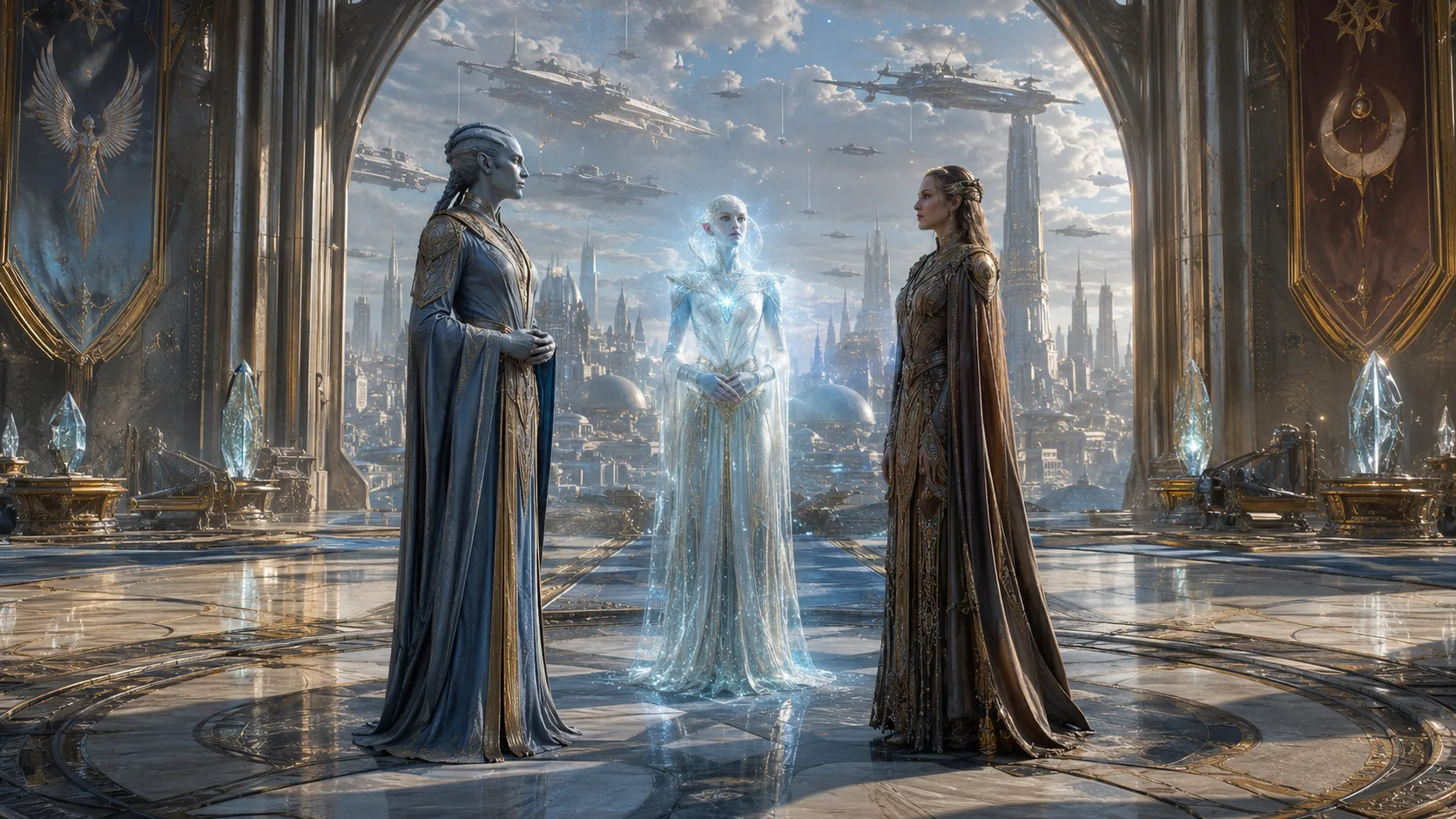
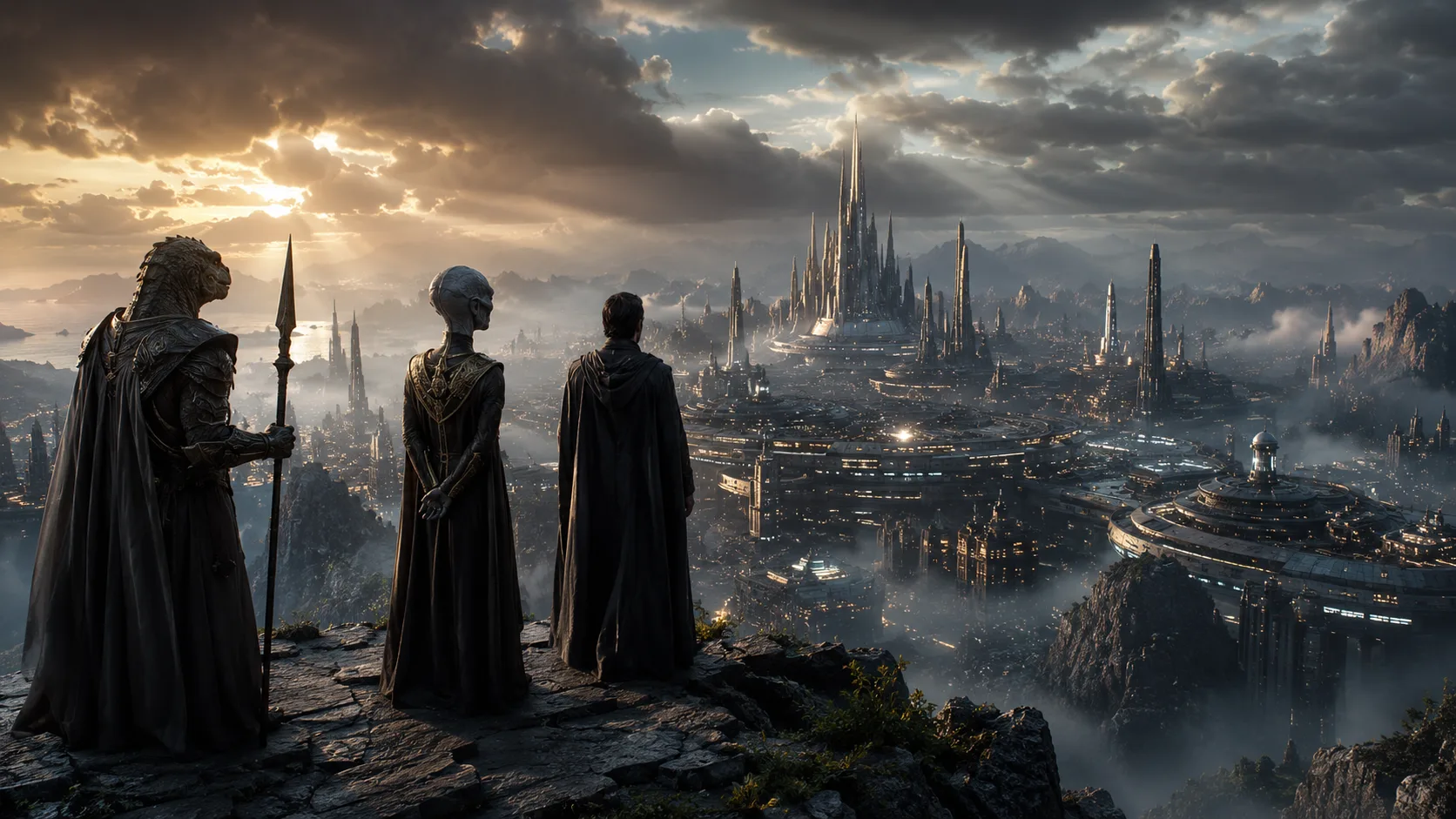
In the Taygetan contact narrative, Taygeta is not just one of the Seven Sisters. It is the home system of a humanoid civilization described as Lyrian in origin, culturally advanced, politically complex, and deeply involved with Earth’s current transition.
The Swaruu / Cosmic Agency material describes Taygetans as a culture of Lyrian descent living on four planets orbiting Taygeta, also known as 19 Tauri, in the M45 Pleiades cluster. (Swaruu)
That claim is central. The Taygetans are presented not as distant angelic abstractions, but as human-looking people with councils, histories, disagreements, military obligations, ethics, and internal politics. In other words, the material tries to move Pleiadian contact away from vague “love and light” messaging and into something closer to exopolitics.
This beautiful music video is a must-watch journey into the world of Taygeta and the advanced Taygetan civilization. Through a peaceful 432Hz song, cinematic visuals, glowing spaceships, and breathtaking planetary scenes, the video brings to life the four Taygetan worlds: Temmer, Erra, Procyon, and Dakote. Each planet is shown with its own atmosphere, beauty, and meaning, from the oceanic harmony of Temmer to the deep forests of Erra, the wild strength of Procyon, and the frozen frontier of Dakote. It is more than a song, it feels like a loving tribute to the Taygetan people, their wisdom, their planets, and their connection to Earth.
The Four Inhabited Planets of Taygeta
Within the Taygetan material, the four primary inhabited planets are Temmer, Erra, Procyon, and Dakote. They are described as culturally connected but environmentally distinct, which helps explain why Taygetan civilization is portrayed as unified without being uniform.
Temmer
Temmer is presented as the first major Taygetan world, a warm oceanic planet with countless islands, stable geology, mild weather, and a cooperative ecosystem. The material describes it as the most populated Taygetan planet and the location of Toleka, the largest city and starport in the system. (Swaruu)
Symbolically, Temmer is the heart. It represents the softer side of the Taygetan identity: water, beauty, community, agriculture, and a high level of ecological integration.
Erra
Erra is the best-known Taygetan world in many contact traditions. It is described as more forested and mountainous than Temmer, with lakes, rivers, cold winters, photoluminescent forests, and a strong association with earlier Taygetan encounters involving Earth. (Swaruu)
If Temmer is the heart, Erra is memory. It carries the feeling of ancestry, contact, and continuity.
Procyon
The Taygetan planet Procyon should not be confused with the real star Procyon. In the contact material, it is described as the largest of the four Taygetan planets, a hot, humid jungle world with stronger gravity and a far more dangerous ecosystem. Few people live there compared with Temmer and Erra. (Swaruu)
Procyon adds contrast to the system. It reminds readers that “Pleiadian” does not automatically mean gentle, easy, or paradise-like. Some worlds are demanding.
Dakote
Dakote is described as the smallest and most distant of the four, a frozen tundra world with low gravity, harsh temperatures, and a limited population. In the material, it also has a defensive role, with military and security installations guarding the Taygetan system. (Swaruu)
Dakote is the perimeter. It represents vigilance, survival, and the reality that even advanced civilizations, in this worldview, still face boundaries and threats.
The Alcyone Council and Pleiadian Governance
The political center of the Pleiadian contact narrative is the Alcyone Council.
In astronomy, Alcyone is the brightest star in the visible Pleiades. In the Taygetan material, the name becomes political: Alcyone is the symbolic and organizational center for the Pleiadian races.
One Swaruu transcript describes the Alcyone Council as representing civilizations within the M45 Pleiades system and having political weight inside the Federation. Another describes it as the highest council organism representing the interests of Pleiadian races while not overriding the sovereignty of individual societies. (Swaruu) (Swaruu)
That distinction matters. The Alcyone Council is not portrayed as a centralized empire. It is closer to a diplomatic body or confederation. Each civilization keeps its own internal structure, while the council handles shared Pleiadian concerns: security, treaties, interstellar relations, and Federation-level politics.
This is where the Taygetan material becomes more politically charged. The Pleiadians are not shown as a single harmonious bloc. They are shown as member civilizations negotiating, disagreeing, and adapting under pressure.
The Taygetan Relationship With Earth
The Taygetan contact material presents Earth as a planet under observation, influence, and dispute. Its central claim is that Taygetans have been unusually direct in sharing information with humans, especially through written conversations, transcripts, and long-form explanations of spirituality, history, technology, Federation policy, and galactic politics.
That is one reason the Taygetan material has become so prominent. Many contact sources rely on short channelings or symbolic messages. The Taygetan case, by contrast, offers an enormous amount of structured detail: names, ships, legal arguments, planetary descriptions, social systems, councils, timelines, and political disagreements.
This does not make the material scientifically proven. It does make it unusually developed as a contact archive. For readers interested in Pleiadian disclosure, that level of detail is exactly why Taygeta stands out.
The 2018 Break From Federation Activity
The most important political turning point in the Taygetan narrative is the break from Federation activity around 2018.
A 2021 Swaruu transcript says that in 2018, Swaruu of Erra legally removed herself from Taygeta and the Federation, seeking independence from legal ties she believed interfered with her work and objecting to Federation policies toward Earth. (Swaruu)
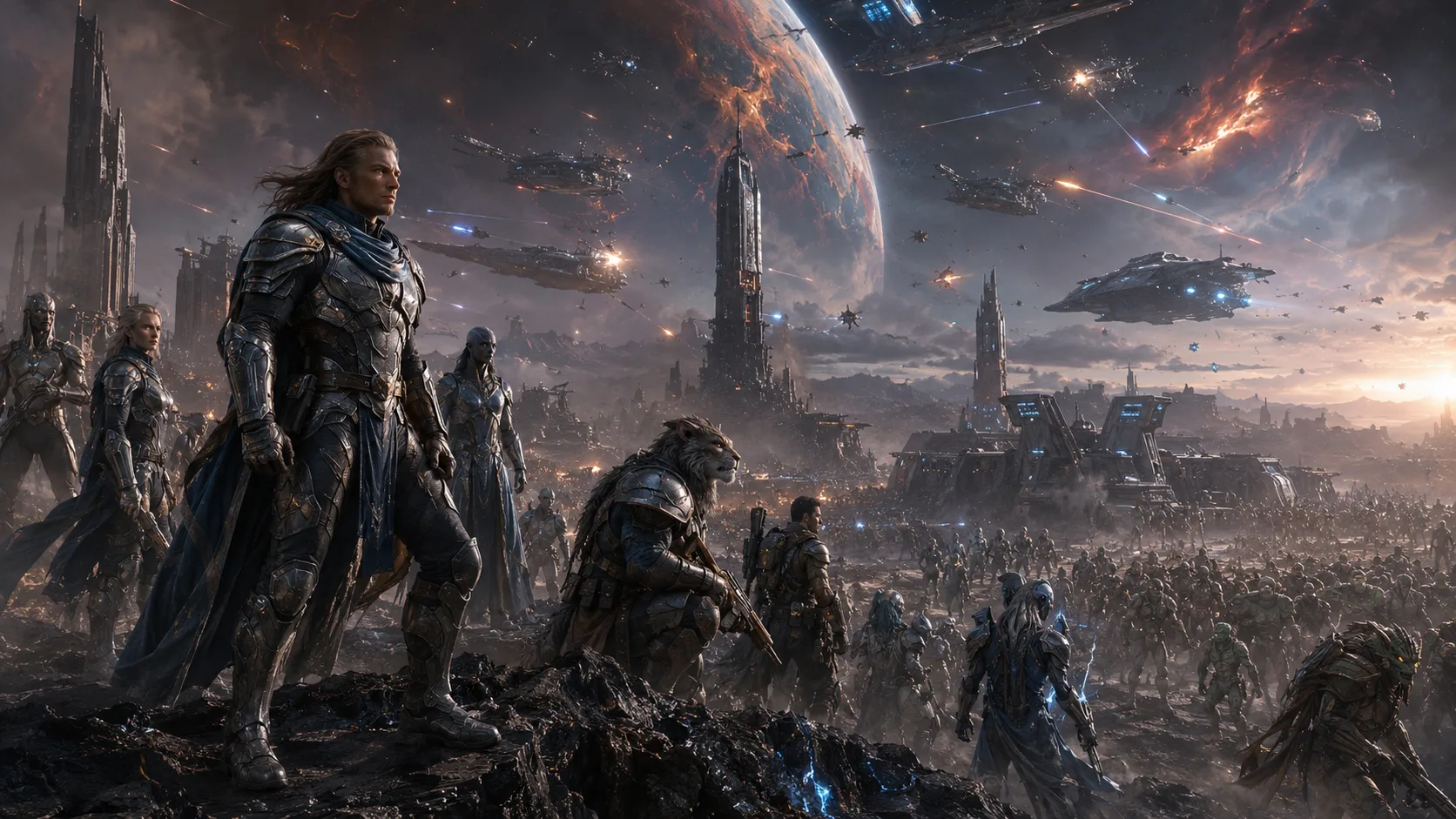
Another transcript says that with Alenym’s rise to power toward the end of 2018 or early 2019, Taygeta “broke away” from its earlier role as a major Federation-aligned force, with the fleet ordered back to Taygeta and only a political representative remaining near Earth. (Swaruu)
In the larger contact story, this is not a minor administrative change. It is a shift from participation to resistance, or at least from obedience to conditional cooperation.
The conflict appears to revolve around one central ethical question: should advanced civilizations intervene more directly in Earth affairs, or should they preserve non-interference even when Earth humans suffer?
The Taygetan position, as presented in the material, is more interventionist, more emotionally involved, and more critical of Federation permissiveness. The Federation position is described as more legalistic, procedural, and cautious.
That tension is what makes the Taygetan material feel different from older Pleiadian narratives. It is not only spiritual. It is political.
Why the Taygetans Matter in Modern Contact Literature
The Taygetans matter because they complicate the Pleiadian archetype.
For decades, “Pleiadian” has often been used as shorthand for gentle, beautiful, spiritually advanced beings offering encouragement to humanity. The Taygetan material keeps some of that tone, but adds friction. It says advanced people can still disagree. Councils can be bureaucratic. Federations can be ethically ambiguous. Good intentions can collide with bad policy.
That makes the Taygetans feel less like distant saviors and more like a civilization wrestling with the same themes humans face:
What does sovereignty mean?
When does non-interference become neglect?
Can law become immoral when it protects the powerful?
How much outside help should Earth expect?
What does real maturity look like for a planetary civilization?
Those questions are the real value of the Taygetan material, whether a reader approaches it as literal contact, symbolic teaching, spiritual myth, or speculative exopolitics.
What Pleiadian Realignment Means for Earth
If the Pleiades have always been a mirror, then the Taygetan story is a very modern reflection.
Ancient people looked up and saw sisters, ancestors, seasonal warnings, and returning light. Modern contact communities look up and see councils, fleets, political fractures, and debates over Earth’s future. The imagery has changed, but the emotional function is similar. The Pleiades still help humans think about where we come from, who watches over us, and what kind of future we’re moving toward.
The Taygetan realignment, as described in the contact material, points to a larger message: Earth’s transition is not about waiting for rescue. It is about discernment. It asks readers to become less passive, less dependent on external authorities, and more capable of thinking through ethics, sovereignty, and responsibility for themselves.
That may be the deepest reason the Pleiades continue to matter.
They are close enough to see, far enough to dream about, and old enough in human memory to feel like they’ve always been part of us. Whether viewed through a telescope, a myth, or a contact transcript, Taygeta and the Seven Sisters remain one of humanity’s most powerful skyward reference points: a cluster of stars that keeps asking Earth who it is becoming.
Cosmic Echoes
Share-ready comments you can copy in a click, then post wherever the conversation touches UFOs, UAP, or the Galactic Federation.
These comments belong to the Cosmic Echoes page under the section Guardians of the Pleiades: Taygetan Truths (2).
Plus 21 more comments on the Cosmic Echoes page.