
Introduction
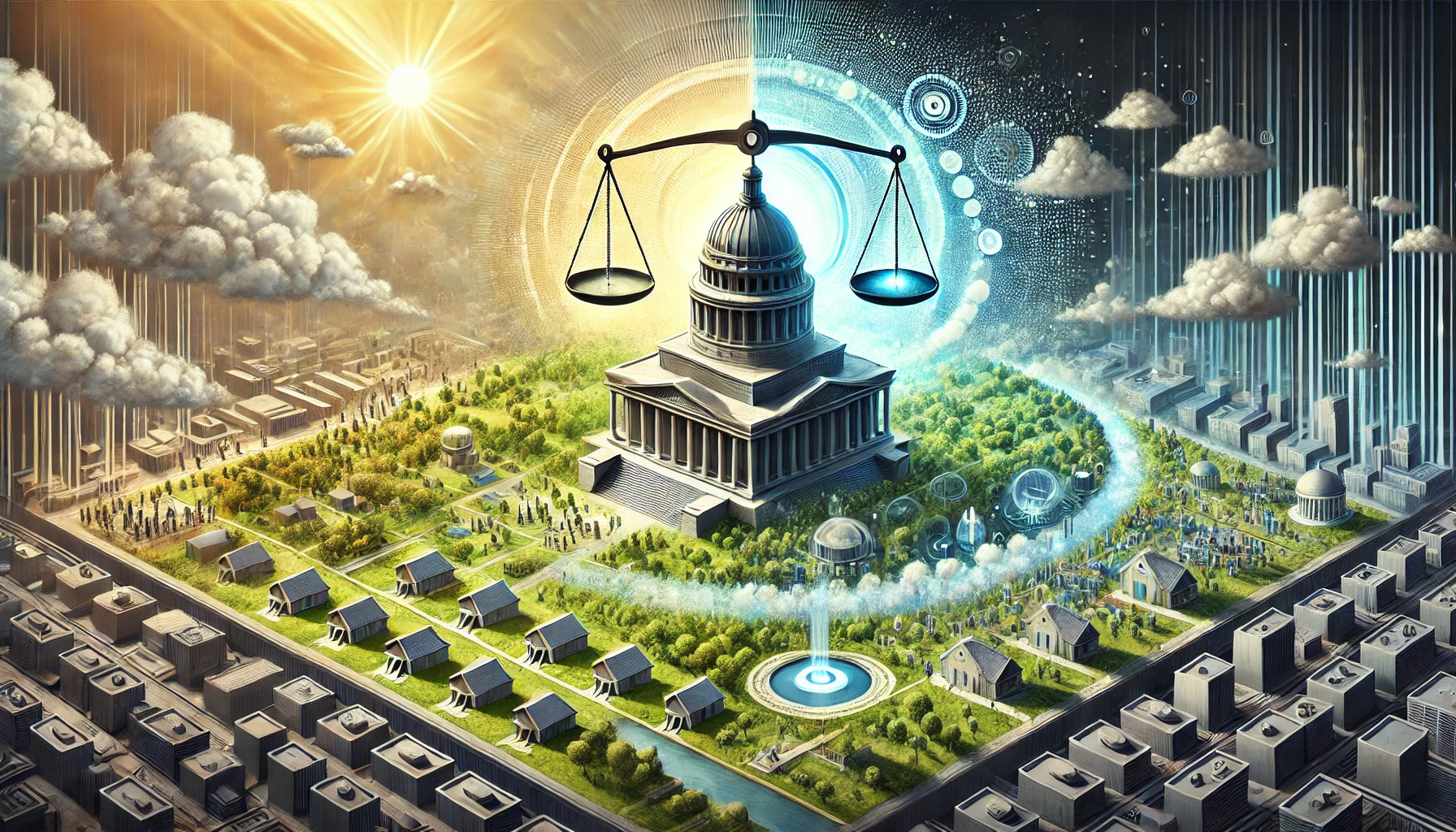
The concentration of political power has long been a breeding ground for corruption, allowing those in authority to prioritize personal interests over the public good. Decentralizing political power offers a solution by distributing authority more evenly, making it harder for corruption to take root and thrive. This article explores the necessity of decentralizing power to achieve true political accountability, ensuring that governments remain transparent and aligned with the needs of their people.
Current Political Structure: A Centralized System
The current political structure in many countries is highly centralized, with a few individuals or groups holding significant control over governmental decisions. This concentration of power often leads to a lack of transparency, as decisions are made behind closed doors, away from public scrutiny. Corruption thrives in such environments, where checks and balances are either weak or non-existent.
Impact:
The centralization of power creates an imbalance, allowing those at the top to exploit resources and manipulate systems for their benefit, often at the expense of the general population.
Decentralization Models: A New Way Forward
Decentralized governance offers a promising alternative to the traditional centralized model. In a decentralized system, decision-making authority is distributed across various levels of government, from national to local. This distribution can take many forms, such as federalism, where states or provinces have significant autonomy, or direct democracy, where citizens have a direct say in policy decisions.
Examples of Decentralization Models
- Federalism:
In federal systems like those in the United States, Germany, or India, power is constitutionally divided between the national government and regional entities (states or provinces), each with its legislative powers. - Direct Democracy:
In Switzerland, direct democracy allows citizens to vote on specific issues, giving them a direct role in decision-making. - Participatory Budgeting:
In cities like Porto Alegre, Brazil, participatory budgeting involves residents in deciding how to allocate public funds, fostering greater community involvement and transparency.
Impact on Communities: Empowerment Through Decentralization
Decentralization can have a profound impact on local communities, empowering them to take control of their destinies. By shifting power closer to the people, communities can have a greater say in how resources are allocated and how policies are implemented.
Key Benefits of Decentralization
- Increased Transparency:
More people are involved in the decision-making process, reducing the likelihood of corruption. - Greater Accountability:
Leaders are more closely connected to the communities they serve, making them more responsive to local needs. - Enhanced Civic Engagement:
Citizens feel more invested in the political process when they see the direct impact of their participation.
Example:
In Kerala, India, decentralized governance has led to improved public services and community-driven development, demonstrating the power of local decision-making.
Implementation Strategies: Building a Decentralized Future
Transitioning to a decentralized political system requires careful planning and a clear roadmap. Here are key strategies to consider:
1. Assess Current Power Structures
- Conduct a comprehensive analysis of existing governance structures to identify areas where decentralization can be most effective.
2. Legal and Constitutional Reforms
- Implement necessary legal and constitutional changes to redistribute authority and establish new governance frameworks.
3. Capacity Building
- Invest in capacity-building initiatives at the local level to ensure communities have the resources and expertise needed to govern effectively.
4. Public Education and Awareness
- Launch campaigns to educate citizens about the benefits and responsibilities of decentralization, building public support for the transition.
5. Monitoring and Evaluation
- Establish systems for continuous monitoring and evaluation to track the effectiveness of decentralization efforts and make necessary adjustments.
Conclusion
Decentralizing political power is not just an option; it is a necessity for achieving true political accountability. By distributing authority more evenly, we can create a system of governance that is transparent, responsive, and attuned to the needs of all citizens. Decentralization is a powerful tool for combating corruption and empowering communities, leading to a fairer and more just society. Now is the time to embrace decentralization as a means to secure a brighter future for all.mbrace decentralization as a means to secure a brighter future for all.
Related Articles


🌟 Galactic Message from Korton: A Call to Lightworkers 🌟
Brothers of the Earth and Stars, I am Korton. Today, I bring a message of unity and strength to all lightworkers. More of us are arriving on Earth to support those who work for the light. We face a critical battle of energies—light versus dark. Stay patient, stay confident. We work closely with Earth’s leaders and prepare for a great transformation. Remember, you are never alone. Together, we will ensure that love and light prevail. 🌍✨
Cosmic Echoes
Share-ready comments you can copy in a click, then post wherever the conversation touches UFOs, UAP, or the Galactic Federation.
These comments belong to the Cosmic Echoes page under the section Cosmic Shift: Decentralizing Power for True Accountability.
Plus 21 more comments on the Cosmic Echoes page.