
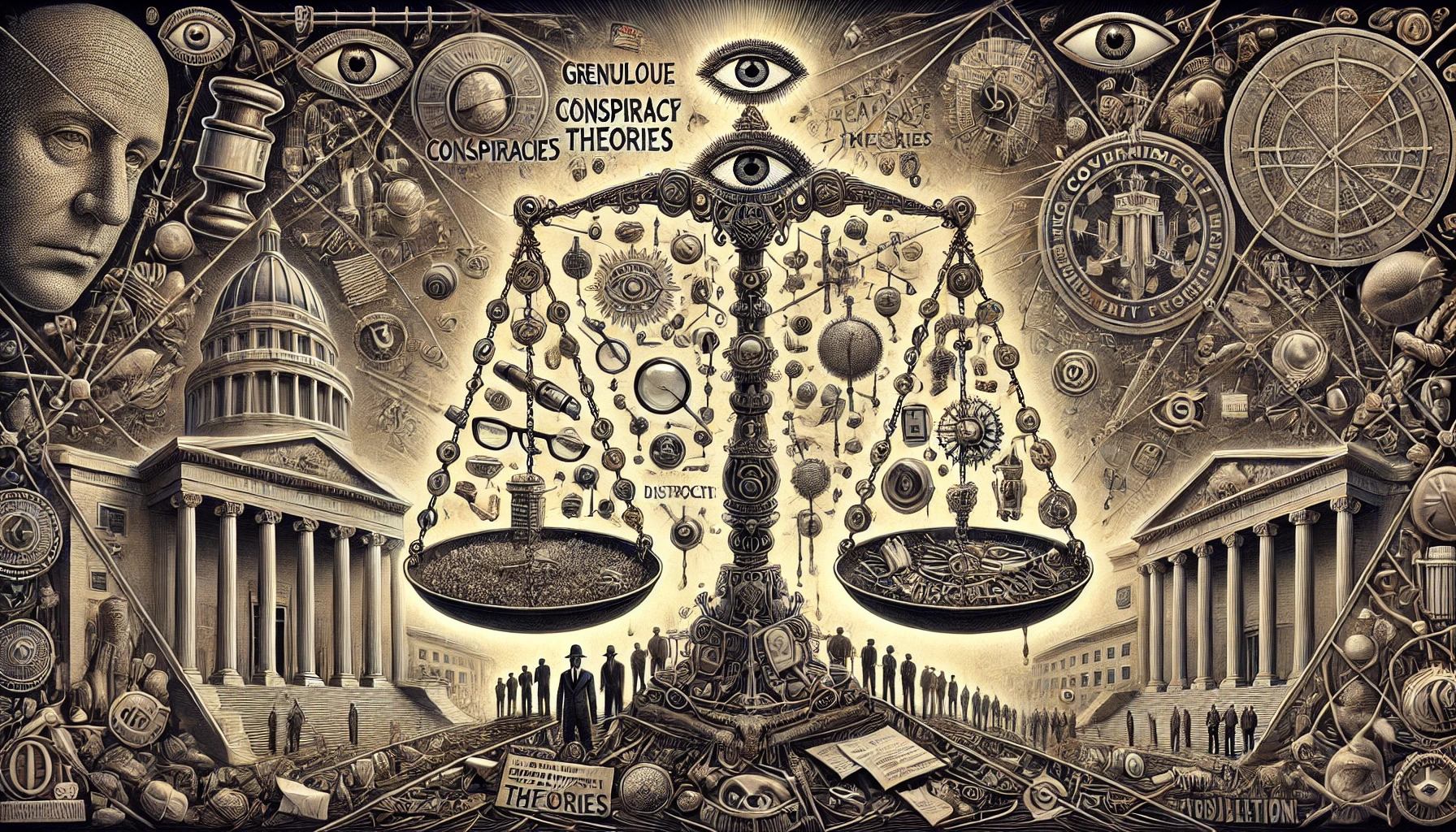
Introduction:
Conspiracy theories often serve as tools for maintaining authoritarian systems rather than representing aberrations or coup d’états. This article explores the intersection of real and false conspiracies and how they perpetuate control.
Defining the Paradox:
Conspiracy theories play a dual role in both challenging and upholding power structures. Charles R. Drago, a prominent conspiracy theorist, argues that political assassinations, such as that of JFK, are not deviations from the norm but rather acts of system maintenance. Drago’s perspective highlights the complex interplay between genuine conspiracies and the creation of false narratives to mislead the public.
“The real conspiracy lies not in the act itself but in the cover story that keeps the system intact.” – Charles R. Drago
The Role of Conspiracy Theories in System Maintenance:
Government entities often use conspiracy theories to distract and control the populace. Historical examples, such as the JFK assassination and UFO phenomena, demonstrate how these narratives can shape public perception. The spread of conspiracy theories serves to create confusion, leading people away from understanding the true nature of power and control. By fostering a climate of suspicion and uncertainty, governments can more easily manipulate and direct public opinion.
Key Points to Consider:
- Distraction: Conspiracy theories divert attention from critical issues.
- Control: By spreading these theories, governments can guide public opinion.
- Confusion: A bewildered populace is easier to manipulate.
Psy-Ops and Conspiracy Theories:
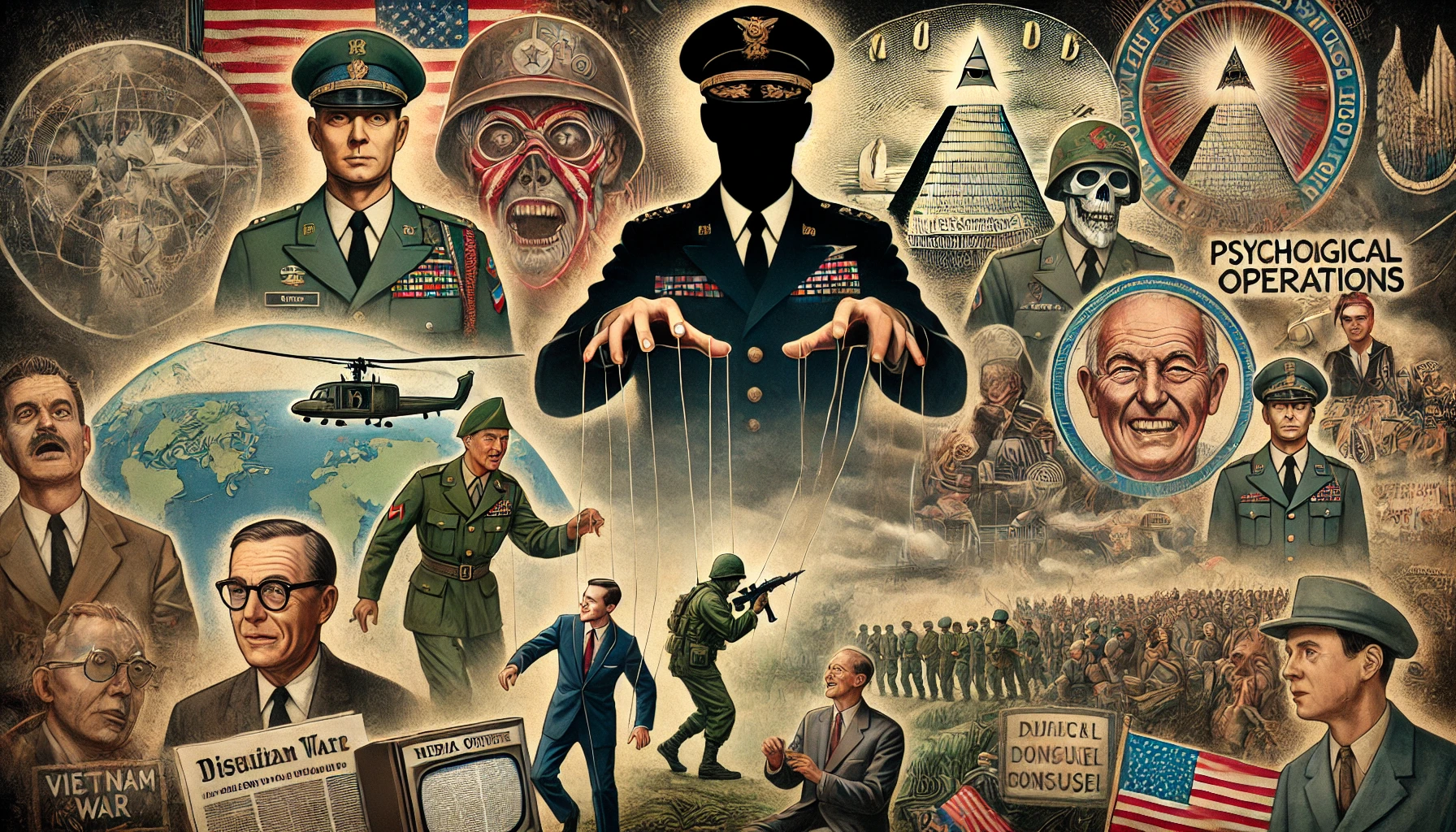
Psychological operations (Psy-Ops) are a critical tool in the dissemination of conspiracy theories. These operations are designed to create confusion, distract the public from significant issues, and maintain authority. General Edward Lansdale’s operations in Vietnam, for instance, involved using fear tactics and psychological manipulation to influence the local population and maintain control. By creating and perpetuating conspiracy theories, authorities can divert attention from their actions and maintain an aura of secrecy.
Be aware of how Psy-Ops can influence not only foreign populations but also domestic perceptions, steering public discourse in ways that maintain power structures.
The Flying Saucer Phenomenon:
The origins of UFO conspiracy theories are closely tied to intelligence operations. The “Flying Saucer” flap of the late 1940s, for example, can be traced back to certain intelligence figures who used these narratives to distract from other activities. These theories serve to divert attention from more pressing issues and maintain governmental control. By fostering belief in extraterrestrial phenomena, authorities can obscure the true nature of their operations and keep the public focused on fantastical explanations.
Conclusion:
The paradoxical nature of conspiracy theories lies in their ability to both challenge and uphold authoritarian systems. While they can expose genuine conspiracies, they are often used to distract and mislead the public. In the modern New World Order, it is crucial to approach such narratives with critical thinking and skepticism. By understanding the methods used by governments to manipulate public perception, we can better navigate the complex web of conspiracy theories and seek a clearer understanding of the truth.
Takeaway Points:
- Always question the source of a conspiracy theory and its potential motivations.
- Understand that conspiracy theories can be tools of control as much as they are tools of exposure.
- Seek out multiple perspectives to avoid falling into the trap of manipulated narratives.
Call to Action:
Engage with this content by sharing your thoughts on how conspiracy theories have influenced your perception of historical events. Join the conversation on our discussion forum and help uncover the truth behind the narratives.
Related Articles


Conspiracy Theories: A Threat to Democracy? – Professor Sir Richard Evans FBA
In this talk Professor Sir Richard Evans FBA looks at recent and current conspiracy theories research to come up with some surprising answers http://www.gresham.ac.uk/lectures-and… Conspiracy theories seem to be everywhere nowadays, encouraged by the internet, and perhaps also by postmodern scepticism. But are they really more common than they used to be, and if so, do they constitute a threat to democracy, as a number of commentators have argued? Are they indeed more prevalent in democracies than in dictatorships?
Here are some informative videos and articles that explore how conspiracy theories are used to maintain authoritarian systems:
- “Conspiracy Theories: A Threat to Democracy?” by Gresham College – This video and article discuss how conspiracy theories are used in both democratic and authoritarian regimes to manipulate public perception and maintain control. The lecture examines historical and modern examples, highlighting the impact of conspiracy theories on political stability and public trust (Gresham College).
- “Functions and Uses of Conspiracy Theories in Authoritarian Regimes” – This article provides an in-depth analysis of how authoritarian regimes utilize conspiracy theories to reinforce power structures, mobilize support, and justify repressive measures. It includes case studies from various historical periods to illustrate these points (Gresham College).
- “How Conspiracy Theories Help to Maintain Vladimir Putin’s Grip on Power” by The Conversation – This article explores how conspiracy theories have been used in Russia to distract from governmental failures and maintain political control. It discusses the strategic deployment of misinformation to shape public perception and strengthen authoritarian rule (Gresham College).
- “Why People Believe Conspiracy Theories” by the American Psychological Association (APA) – This source delves into the psychological factors that make people susceptible to conspiracy theories and how these beliefs can be exploited by those in power to maintain authority. It provides insights into the intersection of psychology and political manipulation (American Psychological Association).
These sources provide a comprehensive view of the role of conspiracy theories in both challenging and upholding authoritarian systems, highlighting their dual nature and the importance of critical thinking in navigating such narratives.
Cosmic Echoes
Share-ready comments you can copy in a click, then post wherever the conversation touches UFOs, UAP, or the Galactic Federation.
These comments belong to the Cosmic Echoes page under the section Veils of Control: Unmasking Political Psy-Ops (2).
Plus 21 more comments on the Cosmic Echoes page.