

Introduction
The history of electrogravitics and anti-gravity research is a fascinating journey that spans more than a century. At its core are two visionary figures: Nikola Tesla, a Serbian-American inventor whose groundbreaking work laid the foundation for modern electrical engineering, and Thomas Townsend Brown, an American physicist who pioneered research into electrogravitics. This article delves into their contributions, the scientific principles behind their experiments, and the potential applications of their discoveries in modern technology. Additionally, it examines the controversial Philadelphia Experiment, a supposed military experiment involving these technologies, and its impact on popular culture and conspiracy theories.
The Pioneers of Electrogravitics
Nikola Tesla and Thomas Townsend Brown are two of the most influential figures in the history of electrogravitics. Tesla, known for his development of alternating current (AC) electrical systems, also explored the relationship between electricity and gravity. He speculated that electrical forces could be harnessed to overcome gravitational pull, a concept that would later inspire the field of electrogravitics.
“If you want to find the secrets of the universe, think in terms of energy, frequency, and vibration.” – Nikola Tesla
Thomas Townsend Brown, building on Tesla’s theories, conducted experiments in the early 20th century that led to the discovery of the Biefeld-Brown effect. This phenomenon occurs when a high-voltage electrical charge is applied to an asymmetric capacitor, causing it to move toward the positively charged side, seemingly defying gravity. Brown’s work suggested that gravitational forces could be manipulated through the application of electrical energy, opening the door to the possibility of anti-gravity technology.
These early experiments laid the groundwork for future research in electrogravitics, sparking interest in the potential to develop technologies that could revolutionize transportation, space travel, and even military applications.
The Philadelphia Experiment: Myth or Reality?
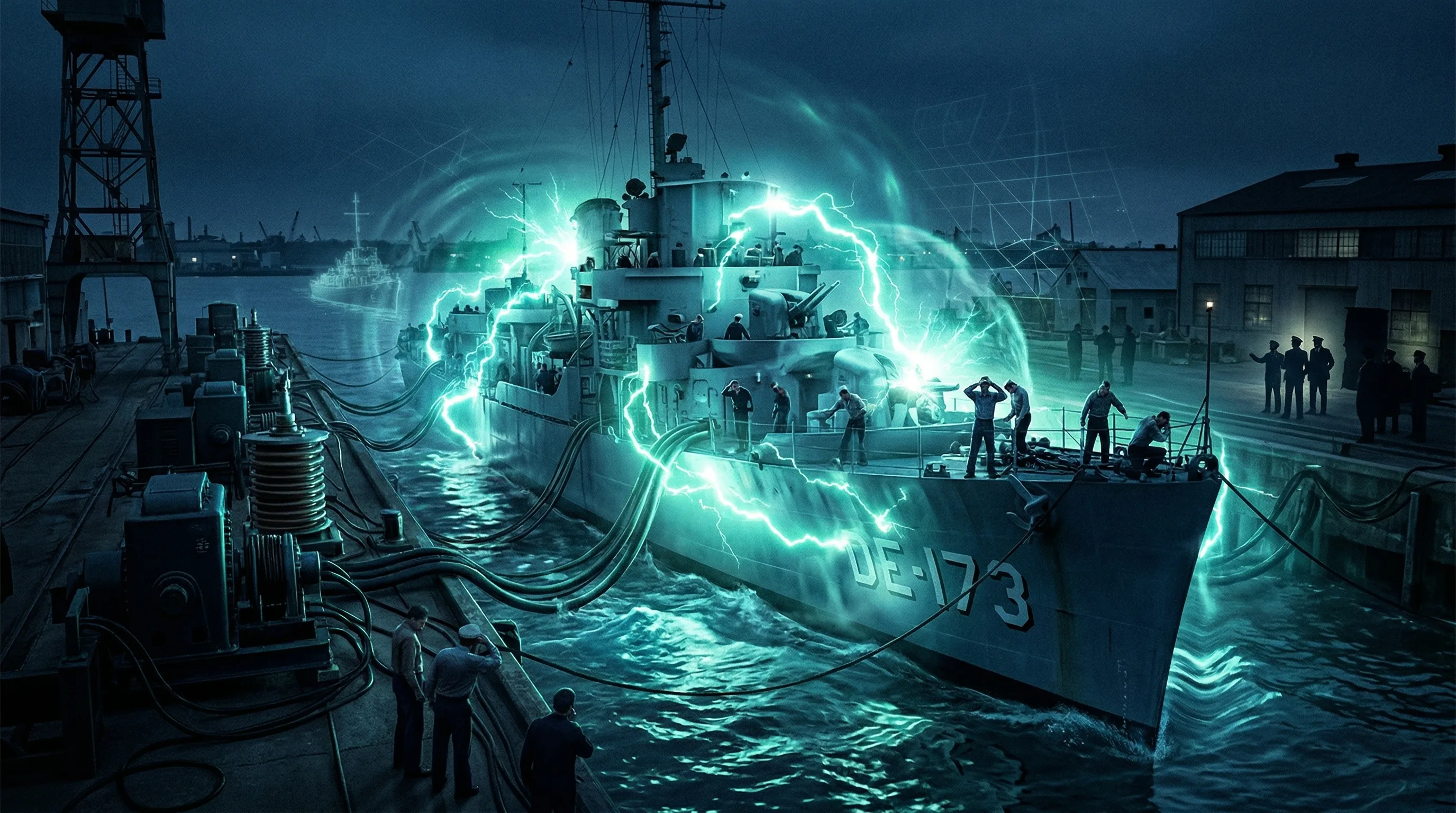
One of the most enduring legends associated with electrogravitics is the Philadelphia Experiment. According to various accounts, this secretive World War II-era experiment allegedly involved the use of high-powered electrical fields to make a U.S. Navy destroyer, the USS Eldridge, invisible to radar and possibly even teleport it to another location. Some versions of the story claim that Nikola Tesla and Thomas Townsend Brown’s research contributed to the experiment, particularly in understanding the connection between electricity and gravity.
Key Points of the Philadelphia Experiment
- USS Eldridge: Allegedly outfitted with massive generators producing powerful electromagnetic fields.
- Objective: Bend light around the ship to make it invisible to enemy radar.
- Consequences: Crew members reportedly experienced disorientation, madness, and even physical fusion with the ship’s metal structure.
In popular culture, the Philadelphia Experiment has been immortalized in the 1984 movie The Philadelphia Experiment, which dramatized the events and added fuel to the growing conspiracy theories surrounding the incident. The movie portrays the experiment as a time travel event, where the ship and its crew are transported through time, leading to disastrous consequences. This cinematic adaptation further cemented the experiment’s place in the annals of mystery and speculation.
Despite the intrigue and widespread fascination, the Philadelphia Experiment is widely regarded as a hoax or, at the very least, a misunderstood event. The U.S. Navy has consistently denied that any such experiment took place, and no concrete evidence has ever surfaced to prove the existence of the experiment or the extraordinary claims associated with it.
Electrogravitics in Military and Space Applications
The potential applications of electrogravitics have not gone unnoticed by military and aerospace industries. During the mid-20th century, Brown demonstrated his findings to the U.S. Navy, showcasing how his electrogravitic devices could achieve lift and propulsion without conventional fuel or engines. These demonstrations reportedly caught the attention of military researchers, leading to classified projects aimed at further exploring the technology’s potential.
Military Research and Development
- Classified Projects: The U.S. military has reportedly conducted classified research into electrogravitic technology, exploring its potential for stealth and propulsion applications.
- Speculative Technology: Some theories suggest that advanced aircraft, possibly even UFOs, utilize electrogravitic principles.
In the aerospace industry, electrogravitics has been explored as a means of developing advanced propulsion systems for aircraft and spacecraft. The idea of creating vehicles that can travel vast distances without relying on traditional propulsion methods has fueled research into electrogravitic and anti-gravity technologies. However, much of this research remains classified, leading to speculation that significant advancements may have been made behind closed doors.
The Future of Electrogravitics and Anti-Gravity

Looking ahead, the potential applications of electrogravitics and anti-gravity technology are vast and varied. In space travel, these technologies could enable faster and more efficient propulsion systems, reducing the time and resources needed to explore distant planets and galaxies. On Earth, they could revolutionize transportation by making it possible to build vehicles that can defy gravity and move with unprecedented speed and agility.
Potential Applications
- Space Exploration: Electrogravitic technologies could drastically reduce travel time between planets, making deep space exploration more feasible.
- Earthly Transportation: Anti-gravity vehicles could lead to a future where cars and planes operate without the need for traditional fuels, offering a cleaner and more efficient mode of transportation.
However, the development and deployment of such powerful technologies come with significant ethical considerations. The potential for misuse, particularly in military applications, raises concerns about the consequences of allowing these technologies to become widespread. Additionally, the environmental impact of developing and using anti-gravity technology must be carefully examined to ensure it does not harm the planet.
Conclusion: The Continuing Quest for Electrogravitics and Anti-Gravity
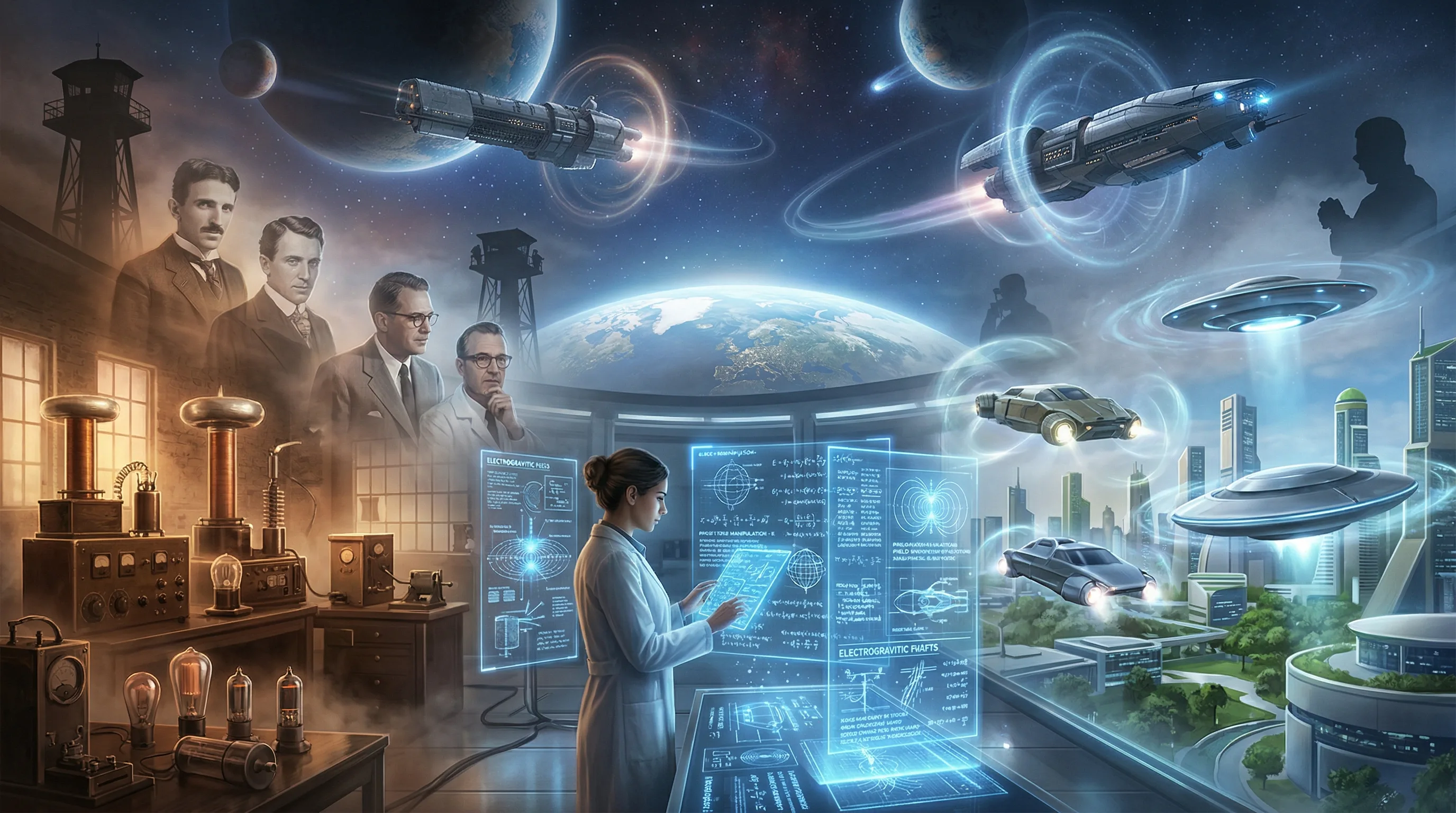
The journey through the history and potential of electrogravitics and anti-gravity technology reveals a realm of possibilities that could redefine our understanding of physics and the very nature of reality. From the pioneering work of Nikola Tesla and Thomas Townsend Brown to the enduring mystery of the Philadelphia Experiment, the field of electrogravitics is filled with intrigue, innovation, and unanswered questions.
Takeaway Points
- Revolutionizing Space Travel: Electrogravitic technologies could enable spacecraft to traverse vast distances at unprecedented speeds.
- Transformation of Earthly Transportation: Anti-gravity vehicles could revolutionize transportation by making it possible to travel with unmatched speed and efficiency.
- Ethical and Environmental Considerations: The deployment of electrogravitics and anti-gravity technology must be approached with caution.
In the end, the story of electrogravitics and anti-gravity is not just about scientific discovery; it’s about the broader implications for society, ethics, and the future of human civilization. As we stand on the brink of potentially groundbreaking advancements, it is essential that we proceed with a sense of responsibility, curiosity, and a commitment to the greater good.
To learn more about the fascinating history of anti-gravity research and the science behind it, check out this video on Gaia: Secrets of Anti-Gravity. The video explores how German scientists have been researching anti-gravity technology for over 150 years. It delves into the work of T. Townsend Brown, who discovered the critical link between electricity and gravity, a theory that underpins the development of exotic propulsion systems used in secret space programs.



Cosmic Echoes
Share-ready comments you can copy in a click, then post wherever the conversation touches UFOs, UAP, or the Galactic Federation.
These comments belong to the Cosmic Echoes page under the section Gravity’s Secret: The Electric Revolution.
Plus 21 more comments on the Cosmic Echoes page.