
Introduction
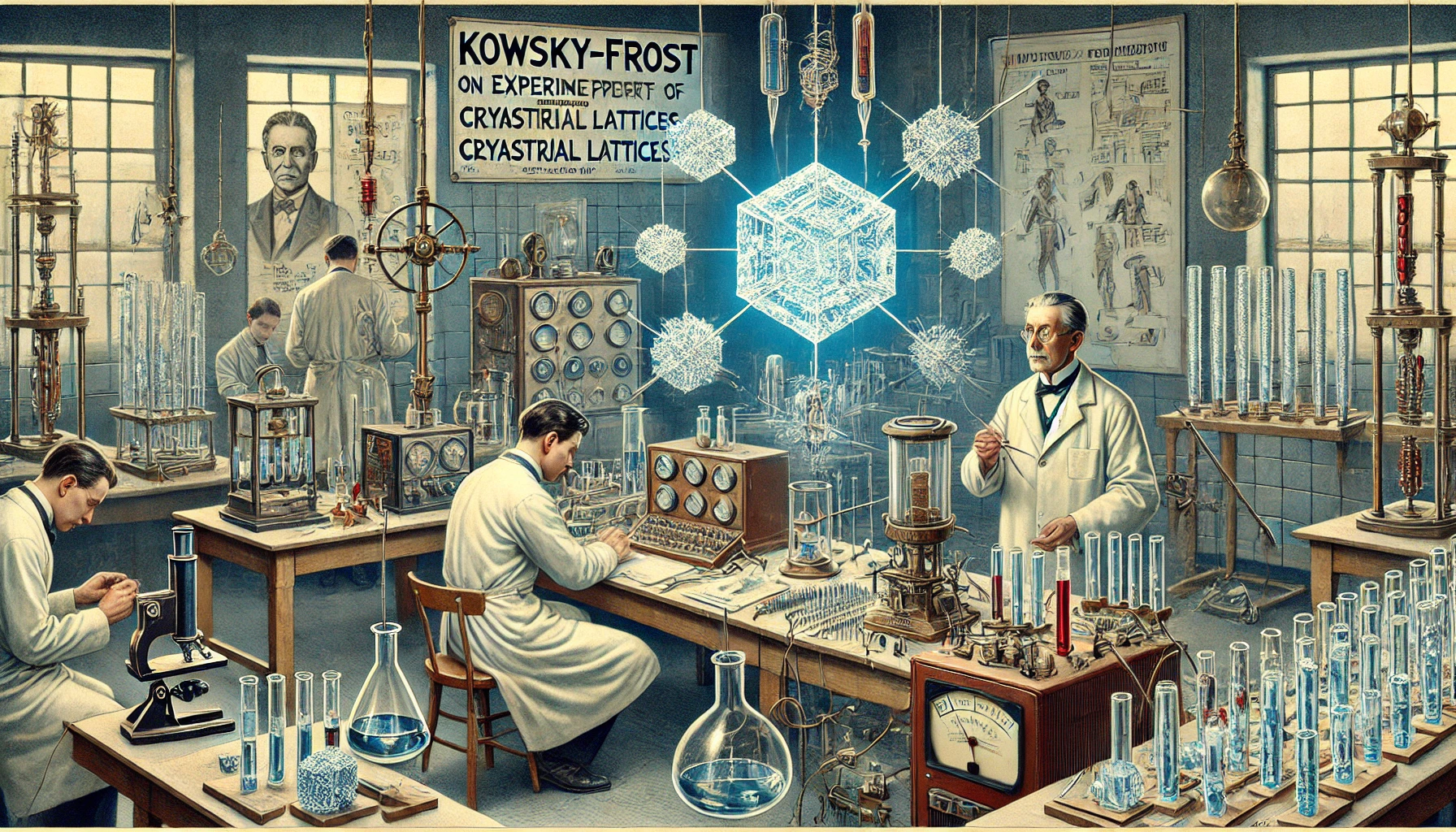
In the summer of 1927, two Polish scientists, Kowsky and Frost, made a groundbreaking discovery that could redefine our understanding of gravity. Building on the earlier research into piezoelectricity by Meissner of Telefunken, they found that certain crystals, under specific conditions, not only lost transparency but also exhibited anti-gravity properties. This discovery, which involved quartz crystals exposed to high-power radio waves, offers profound implications for modern science.
The Discovery: Anti-Gravity Properties Unveiled
Kowsky and Frost’s pivotal experiment focused on optical-grade quartz crystals, measuring 5x2x1.5 mm. These crystals were subjected to oscillations generated by radio transmitters with several kilowatts of power. Over time, the crystals exhibited an astonishing 800% increase in volume. Even more remarkably, the crystals, along with a suspended 25-kilogram weight, began to float freely—defying gravity at a height of two meters in the laboratory.
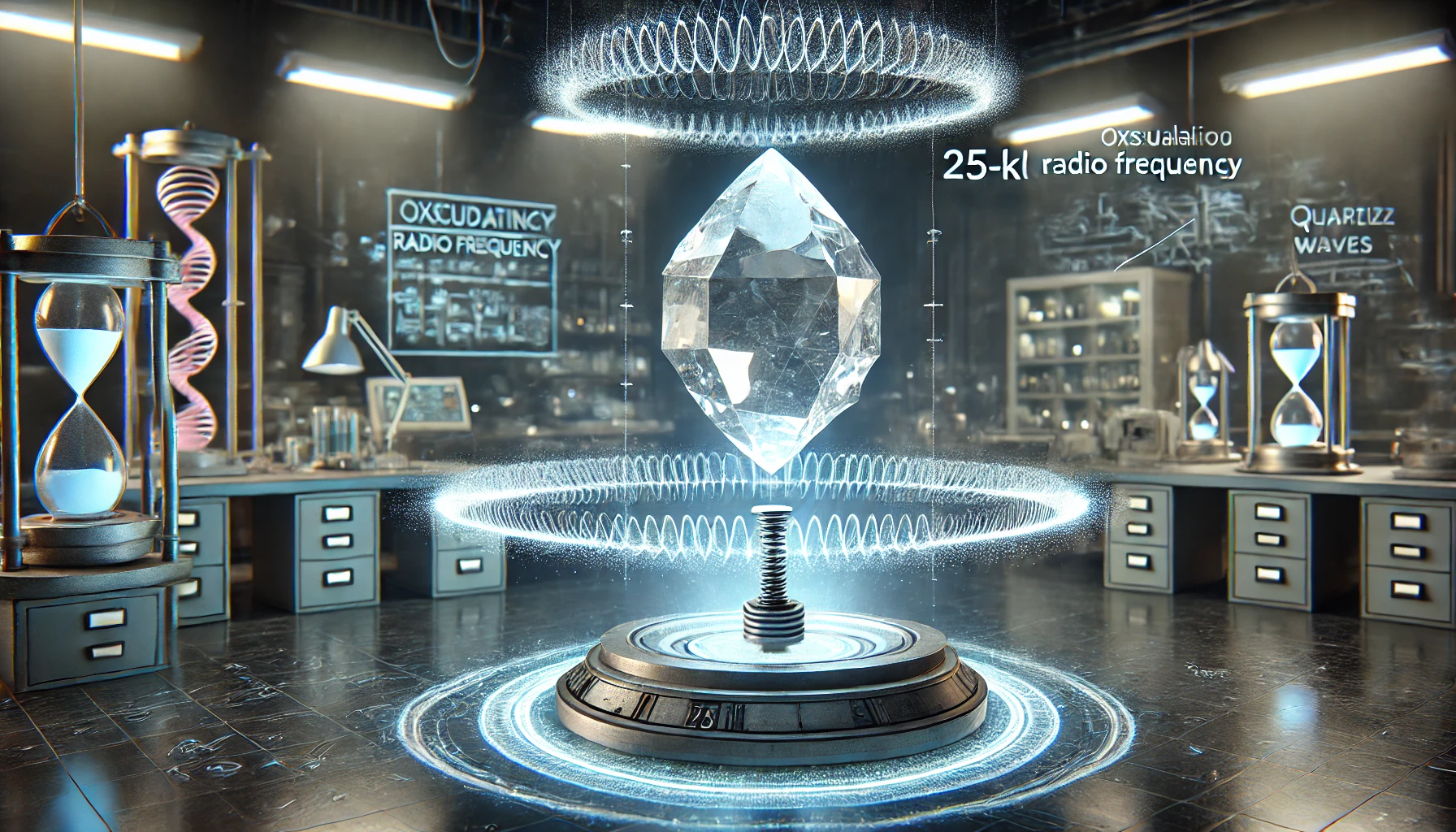
This phenomenal occurrence was documented in the German journal Radio Umschau and the Science and Invention (September 1927 issue), marking a milestone in scientific exploration.
Experiment Details: The Mechanics of Anti-Gravity
1. Opacity and Volume Expansion
When piezoelectrically overloaded, the quartz crystals became opaque and expanded by 800%, showcasing a dramatic change in their structure.
2. Weight Reduction
Initially weighing only about one ounce, the crystals’ weight reduced as their volume increased, allowing them to lift 880 ounces while floating in the laboratory. This lift was triggered by two types of oscillation pressure:
- Vertical Oscillation: Achieved through direct electrode contact.
- Transverse Oscillation: Executed with non-attached electrodes broadcasting radiation, with the crystal placed between them.
“The experiments by Kowsky and Frost revealed an incredible phenomenon: not only did the crystals increase in size, but they also defied gravity, floating along with substantial weights.” — Pull Quote from the original journal.
Radio Frequency Emissions and Magnetostriction
The behavior of magnetostrictive materials during the experiment was also significant:
- Heat Emission and Dimensional Changes: When exposed to a varying magnetic field, magnetostrictive masses emitted heat and experienced changes in their dimensions.
- Molecular Alignment: These changes occurred as the molecular structure aligned with the magnetic field, inducing mechanical pressures that led to dimensional alterations. Although these changes were temporary, they were particularly noteworthy in non-magnetic substances like dielectric crystals.
Contemporary Relevance: Applying the Findings Today
Stress Model of Deformation
Recent theoretical models propose that the phenomena observed by Kowsky and Frost may be explained through the stress model, which suggests that internal stress can induce deformation, potentially altering a mass’s gravitational properties.
Practical Applications
Given the profound implications of this discovery, anti-gravity technologies are no longer a concept of science fiction. Instead, we see potential for real-world applications, such as self-contained lifting devices and other futuristic transportation methods.
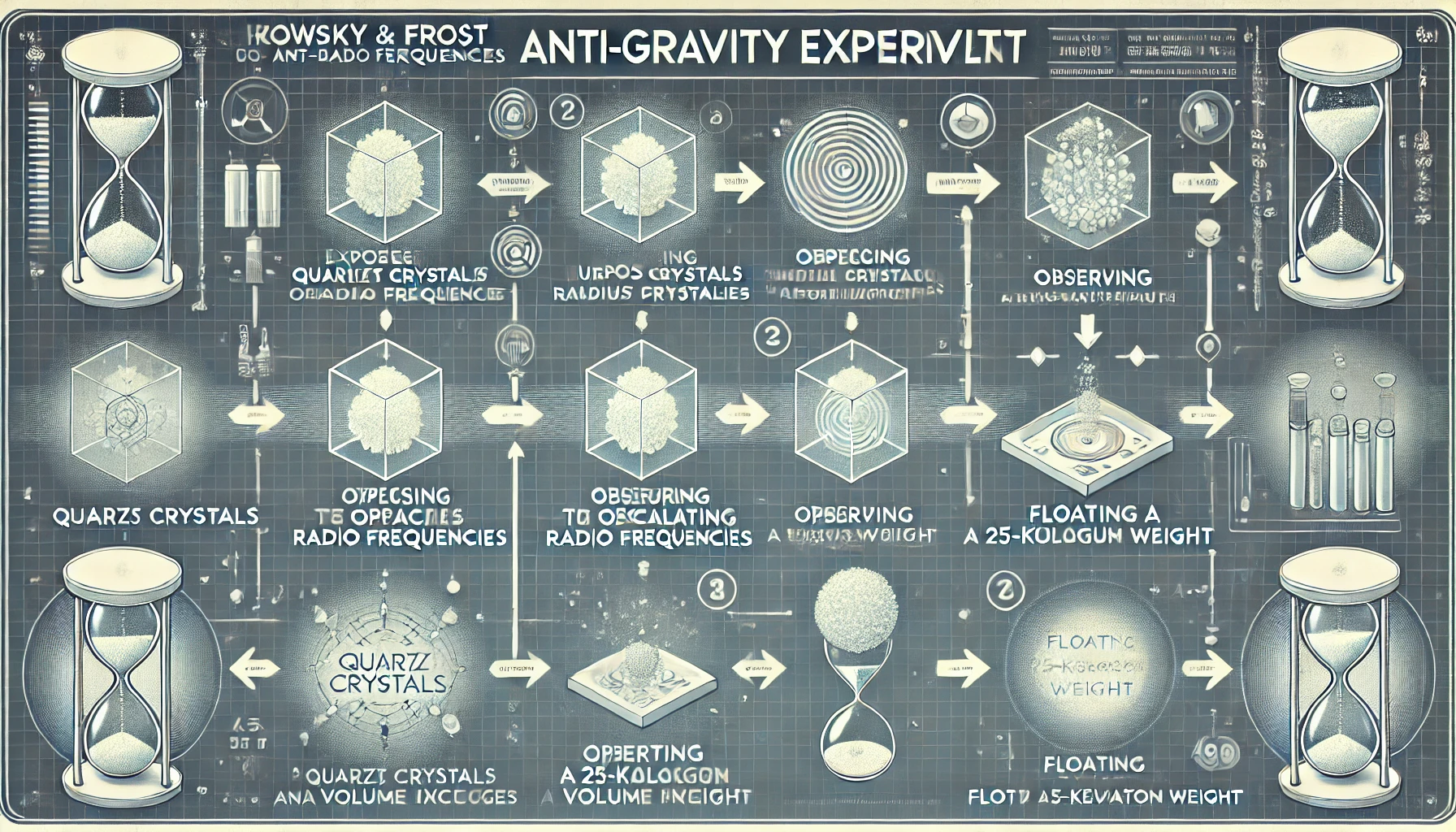
Infographic: The Experiment’s Key Steps
Pro/Con Analysis: Implications of Anti-Gravity Discoveries
| Pros | Cons |
|---|---|
| Potential development of new lifting devices | Requires immense power to achieve |
| Opens new avenues in space exploration | Limited replication of results to date |
| Could revolutionize material science | High cost of experimentation |
Table 1: A quick breakdown of the pros and cons of applying Kowsky and Frost’s discovery in practical applications.
FAQs
1. How did Kowsky and Frost’s experiment influence modern science?
Their findings laid the groundwork for further research into anti-gravity, piezoelectricity, and crystal behavior under electromagnetic fields, influencing everything from space exploration to theoretical physics.
2. Why was the experiment not replicated widely?
The conditions required for the experiment were highly specific, and reproducing the results requires considerable resources and power.
Historical Timeline: From Discovery to Modern Applications
| Year | Event |
|---|---|
| 1927 | Kowsky and Frost’s groundbreaking discovery |
| 1930-1950 | Piezoelectric studies continue to expand across Europe |
| 1980s | Renewed interest in anti-gravity technologies |
| 2020s | Theoretical advancements bring anti-gravity closer to reality |
Figure 3: Key milestones following Kowsky and Frost’s initial 1927 discovery.
Call to Action
To explore more about the pioneering research into anti-gravity and its potential impact on the future of space travel and technology, visit GalacticFederation.in. Share this article with others to spread awareness about the breakthroughs in scientific history.
Related Articles



Kowsky-Frost Experiment – Kei Mizumori/Antigravity
Dive into the mysteries of ancient anti-gravity techniques with Kei Mizumori’s Alternative Science School. Explore the incredible methods used by the Ancient Egyptians to transport massive stones, and discover the fascinating analysis of the Kowsky-Frost Experiment from 1919. Did quartz really float through vibrations and electricity? Was electricity used in ancient Egypt? Join Kei Mizumori as he unravels these ancient secrets. For more insights and to support further research, visit Kei Mizumori’s Homepage or watch the next episode on Vimeo.
Cosmic Echoes
Share-ready comments you can copy in a click, then post wherever the conversation touches UFOs, UAP, or the Galactic Federation.
These comments belong to the Cosmic Echoes page under the section Cosmic Echoes: The Anti-Gravity Crystal Revelation.
Plus 21 more comments on the Cosmic Echoes page.