
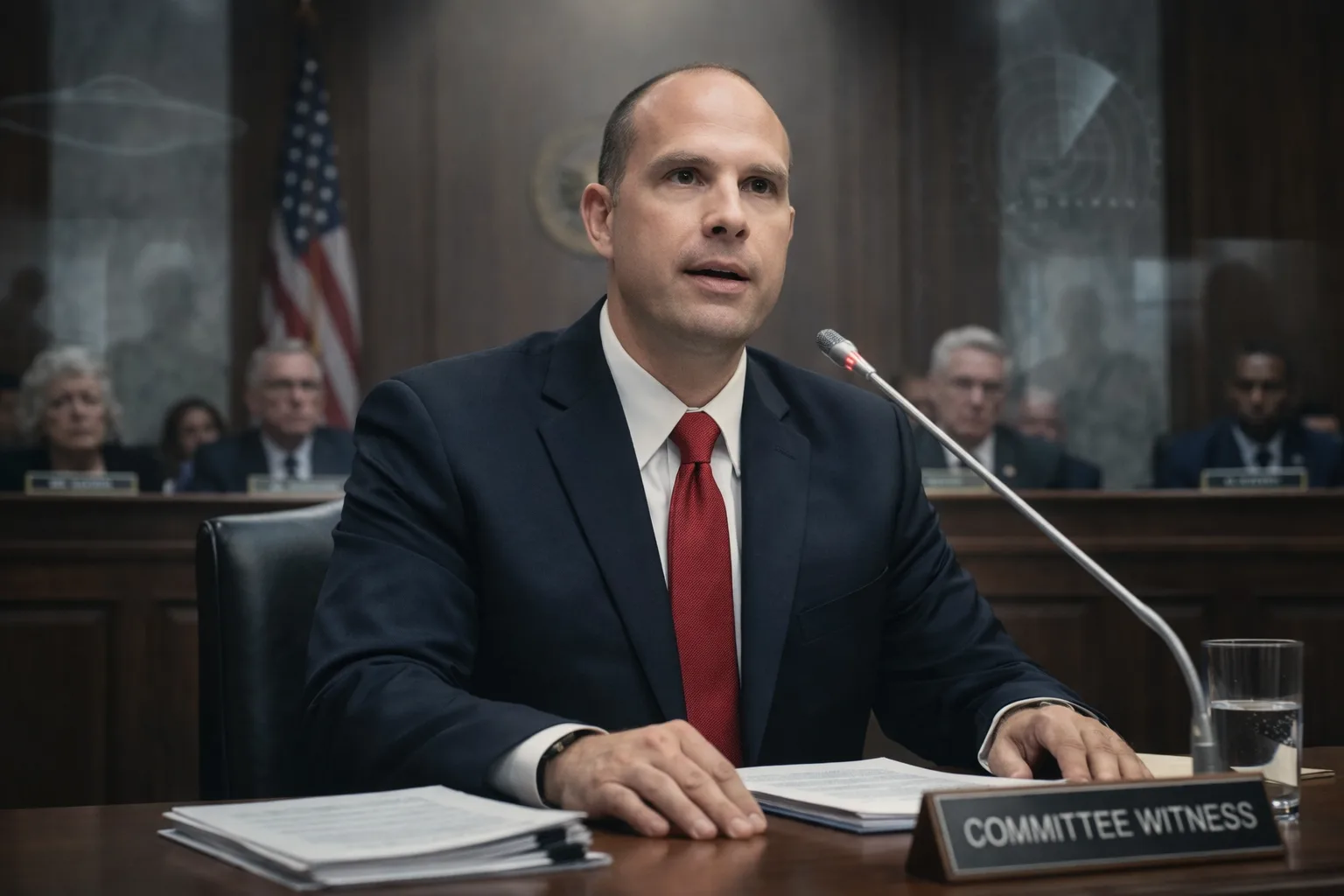
Introduction: When the Conversation Changed
For years, discussions around unidentified aerial phenomena lived on the edges—circulating through leaked videos, secondhand accounts, and speculation. That changed on July 26, 2023.
On that day, David Grusch, a former intelligence officer with a decorated military background, sat before the U.S. House Oversight Committee and spoke under oath. His claims weren’t vague. They weren’t framed as theories. They were direct, detailed, and delivered through official channels designed for exactly this kind of disclosure.
At that moment, the conversation shifted—from “Is this real?” to “Why are we just hearing about it now?”
Who Is David Grusch?
Before his name became widely known, David Grusch had already built a career inside the U.S. intelligence community.
A Background Built on Access
Grusch served as:
- An Air Force veteran with operational experience
- A member of the National Geospatial-Intelligence Agency (NGA)
- A representative to the All-domain Anomaly Resolution Office (AARO), the Pentagon’s official UAP investigation body
His role placed him in a position to evaluate classified information across multiple agencies. This wasn’t someone speculating from the outside—he was working within the system, with the credentials and clearance to match.
The Whistleblower Path: Using the System as Designed
One of the most overlooked aspects of Grusch’s story is how he came forward.
He didn’t leak documents. He didn’t go anonymous. He followed a legal pathway built for intelligence disclosures.
The Intelligence Community Whistleblower Protection Act
Grusch filed a formal complaint under the Intelligence Community Whistleblower Protection Act (ICWPA). This law allows individuals with classified knowledge to report concerns to oversight bodies without violating national security laws.
His complaint was submitted to the Intelligence Community Inspector General (ICIG)—the authority responsible for evaluating such claims.
The result?
His complaint was deemed:
- “Credible”
- “Urgent”
That classification matters. It means the Inspector General found his information serious enough to warrant immediate attention by Congress.
What He Claimed—And Why It Matters
Grusch’s testimony wasn’t filled with vague language. It was specific, structured, and grounded in what he described as firsthand investigative work.
Key Claims Presented Under Oath
During the congressional hearing, he stated that:
- The U.S. government is in possession of non-human craft
- These programs involve multi-decade reverse engineering efforts
- There exists non-human biological material recovered alongside some of these craft
- He was denied access to certain programs despite having legal authority through AARO
- There are over 40 additional witnesses with direct knowledge willing to testify
These aren’t minor assertions. They represent a fundamental challenge to long-standing assumptions about government transparency and technological capability.
“Non-Human Intelligence”: A Phrase That Changed the Tone
One of the most striking elements of the hearing—and the legislation that followed—was the use of a specific phrase:
“Non-human intelligence.”
Why That Language Matters
This wasn’t casual wording. In government contexts, language is deliberate.
Using a term like “non-human intelligence” instead of “extraterrestrial” or “alien” does a few important things:
- It avoids assumptions about origin
- It allows for broader interpretations (including unknown or advanced non-human systems)
- It signals a shift toward technical classification rather than speculation
In other words, the conversation moved out of the realm of pop culture and into formal, bureaucratic recognition.
The 40+ Witnesses: A Larger Story Behind One Voice
Grusch made it clear that he wasn’t alone.
Behind his testimony, he referenced more than 40 individuals who:
- Have direct knowledge of these programs
- Are prepared to testify under proper legal protections
- Include both military and intelligence personnel
This transforms the narrative from a single whistleblower to a potential network of corroboration.
And in intelligence work, corroboration changes everything.
Allegations of Intimidation and Suppression
Another critical element of Grusch’s claims involves how information has been handled internally.
What He Reported
Grusch stated that:
- Individuals attempting to come forward have faced intimidation
- Some have experienced professional retaliation
- In certain cases, there were claims of personal harm or threats
These allegations are serious—and they shift the focus from what is known to how that knowledge has been controlled.
The Timeline: From AARO to Congress
Understanding the sequence of events helps clarify why this moment mattered.
Key Timeline Highlights
- AARO Involvement: Grusch participates in official UAP investigations
- Discovery Phase: Learns of programs he believes were hidden from oversight
- Whistleblower Filing: Submits complaint through ICIG under ICWPA
- Inspector General Review: Complaint labeled credible and urgent
- Congressional Testimony (July 26, 2023): Public, sworn testimony delivered
This wasn’t a sudden appearance—it was the result of a structured process moving through official channels.
The Government Response: Not Dismissal, But Investigation
Perhaps the most telling detail is what didn’t happen.
Grusch wasn’t publicly discredited.
He wasn’t dismissed as unreliable.
Instead, his claims triggered:
- Formal review processes
- Continued congressional interest
- Legislative language addressing UAP transparency
For agencies that typically guard their credibility closely, that response speaks volumes.
Why This Moment Feels Different
There have been whistleblowers before. There have been claims, leaks, and rumors for decades.
But this situation stands apart for a few reasons:
- It happened under oath in a congressional hearing
- It followed legal whistleblower procedures
- It was backed by an Inspector General assessment
- It referenced multiple corroborating witnesses
- It influenced real legislative language and policy discussions
Taken together, it marks a shift from speculation to structured inquiry.
Conclusion: A Door That’s Now Open
David Grusch didn’t just add another story to the UAP conversation—he changed the framework entirely.
By using official legal channels, presenting sworn testimony, and backing his claims with references to a broader network of witnesses, he forced the topic into a space where it can’t be easily ignored or dismissed.
Whether every claim is ultimately verified or not, one thing is clear:
The system designed to handle sensitive disclosures was used—and it worked.
Now the question isn’t whether people are talking about it.
It’s what happens next.

Cosmic Echoes
Share-ready comments you can copy in a click, then post wherever the conversation touches UFOs, UAP, or the Galactic Federation.
These comments belong to the Cosmic Echoes page under the section Cosmic Echoes: The Intelligence Whistleblower Who Broke the Silence.
Plus 21 more comments on the Cosmic Echoes page.