

The Ariel School Encounter: When 62 Children Met Something That Wasn’t Human
On a Friday morning in September 1994, a group of schoolchildren in rural Zimbabwe ran back from recess with a story no teacher was prepared to hear. They…
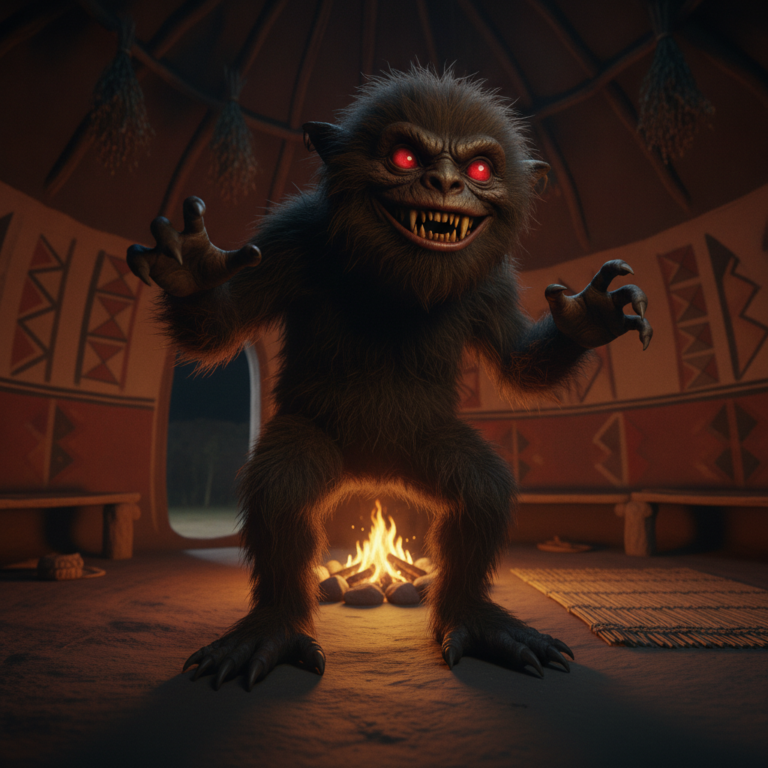
Also known as: Tokoloshe, Tikoloshe, Tokoloshe Beings, Tokoloshe Type, Hilly-Hilly
Small, mammalian non-humanoid beings from South African folklore, often linked to extraterrestrial contact and classified under non-humanoid mammalian phenotypes in Exopaedia.
The Tokoloshe-like Beings are a classification of entities appearing in Zulu and related South African folklore as dwarfish, hairy creatures that cause mischief, illness, or misfortune. In modern ufological contexts, they are sometimes described as a non-humanoid mammalian extraterrestrial species, possibly inhabiting a parallel dimension or Earth’s astral plane. Their exact origin remains unknown, but they are frequently reported in contact cases involving small, stealthy, and trickster-like entities.
No confirmed homeworld; some sources suggest a subterranean or interdimensional habitat.
Reported to have been present on Earth for millennia, primarily in southern Africa, with occasional sightings elsewhere.
Trace this species entry through its recorded origin system, homeworld references, distance from Earth, constellation data, and known relationship points inside the Galactic Federation archive.
Typically described as short, hunched, and hairy, with disproportionately large heads, sharp teeth, and thick, dark skin or fur. Arms and legs are stubby, sometimes ending in claws. Eyes are often red or glowing. In some accounts, they appear partially translucent or able to shift between physical and etheric states.
Often characterized as mischievous, malevolent, or trickster-like. They are believed to drain life force or cause bad luck, but some accounts suggest they are neutral or simply playful.
No credible reports of hybridization with humans.
Explore lineage, alliance, origin-system, and transmission links radiating from this species entry.
Central to Zulu, Xhosa, and other Nguni mythologies. Traditionally believed to be created by or aligned with witches (sangomas or abathakathi). They are often feared and rituals are performed to ward them off (e.g., raising beds on bricks to prevent them from reaching sleepers).
Generally considered neutral or malevolent in folklore; some modern interpretations view them as low-density entities or nature spirits.
Mostly nonverbal; use telepathy or grunts. In some contact cases, they communicate through images or emotions.
Level: None observed; their abilities are perceived as magical or paranormal rather than technological.
No evidence of crafts or advanced tools; they are often described as primitive in appearance.
Deeply rooted in African folklore, with numerous historical accounts. Modern ufology includes occasional sightings of small, mammalian beings fitting the Tokoloshe description, often in rural areas.
Yes – part of indigenous oral traditions for centuries, possibly thousands of years.
Rare but reported in southern African UFO cases; often linked to poltergeist activity or 'alien' encounters involving small hairy beings.
Limited; some New Age channels refer to 'Tokoloshe' as a form of earthbound spirit or low-level astral entity, not typically as extraterrestrial.
Directly from Zulu folklore; the Tokoloshe is a well-known figure. The Exopaedia classification attempts to connect this folklore to extraterrestrial phenotype, though evidence is sparse.
No known starseed groups identify with Tokoloshe.
First Contact Period: Prehistoric (folklore origin); modern contact sporadic from mid-20th century onward.
No political structure recorded; possibly solitary or small group entities.
On a Friday morning in September 1994, a group of schoolchildren in rural Zimbabwe ran back from recess with a story no teacher was prepared to hear. They…
Primary sources: Exopaedia phenotype list, Zulu oral tradition, limited UFO encounter reports from South Africa. Confidence in extraterrestrial origin is low; most evidence is folkloric.