

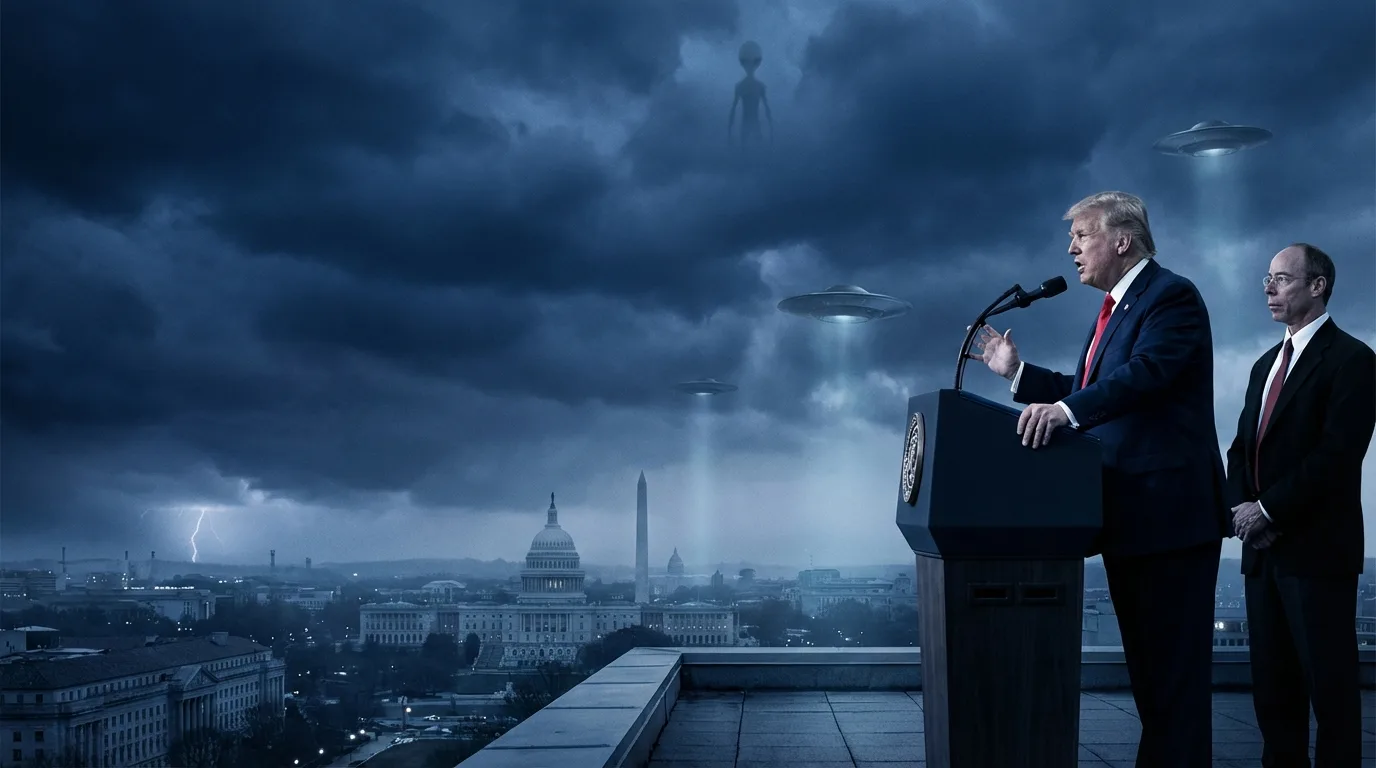
Recent public statements attributed to President Donald J. Trump and echoed by the White House describe a directive to identify and release U.S. government files related to alien and extraterrestrial life, unidentified aerial phenomena (UAP), and unidentified flying objects (UFOs). The language suggests that, in response to “tremendous interest,” federal agencies would begin reviewing and potentially disclosing materials connected to these “complex” and “important” matters.
For many Americans and international observers, such statements raise immediate questions. Does this signal official confirmation of extraterrestrial life? Is the government preparing to reveal long-suppressed secrets? Or does it reflect a continuation of recent transparency efforts around unexplained aerial sightings that remain, at least publicly, unresolved?
A closer look at current investigations, congressional oversight, and the mechanics of declassification reveals a more measured reality. The issue of UAP has evolved significantly in recent years, but it has not crossed the line into verified acknowledgment of alien life. Understanding the difference is essential.
“Unidentified” does not mean “extraterrestrial.” It means the available data does not yet allow a definitive explanation.
From UFOs to UAP: Why the Terminology Changed
The shift from “UFO” to “UAP” is more than cosmetic. Historically, “unidentified flying object” carried cultural baggage—associations with science fiction, conspiracy theories, and Cold War-era speculation. In recent years, the U.S. government and military have adopted the term “unidentified aerial phenomena” to describe objects or events observed in the air that cannot immediately be explained.
The distinction matters. A UAP is simply an aerial event that has not yet been identified with available evidence. It may later be attributed to:
- Foreign adversary technology
- Classified U.S. programs
- Atmospheric or sensor anomalies
- Balloons or drones
- Natural phenomena
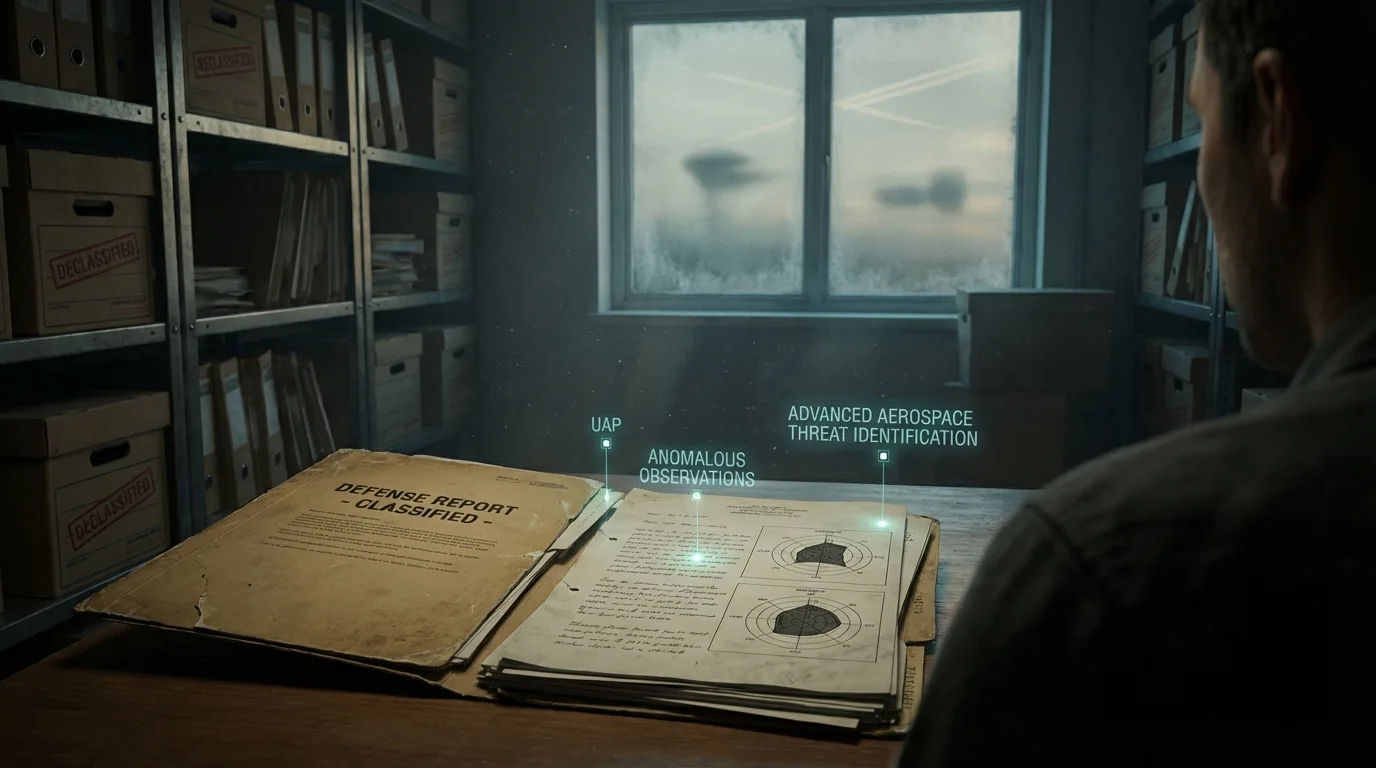
The term does not imply extraterrestrial origin. The Office of the Director of National Intelligence (ODNI), in its unclassified UAP assessment reports beginning in 2021, consistently emphasizes that while many incidents remain unresolved, there is no confirmed evidence that any involve alien spacecraft.
That gap between “unidentified” and “alien” often fuels public speculation. It also underscores why official language tends to be cautious.
Congressional Hearings and the Push for Transparency
In recent years, Congress has taken an unusually active role in examining UAP reports. Public hearings in 2022 and 2023 featured testimony from Department of Defense officials and former intelligence personnel. Lawmakers from both parties pressed for greater transparency, citing national security concerns and public trust.
Key developments include:
- The establishment of the Pentagon’s All-domain Anomaly Resolution Office (AARO), tasked with investigating UAP incidents.
- Legislative language in the National Defense Authorization Act requiring regular reporting to Congress.
- Calls for streamlined declassification processes when information does not compromise security.
These hearings have focused largely on airspace safety and potential foreign surveillance risks. Military pilots have reported encounters with objects exhibiting unusual flight characteristics. However, officials have repeatedly stated that most cases lack sufficient data for firm conclusions.
Crucially, congressional oversight has centered on accountability, not on confirming extraterrestrial life. The framing remains rooted in national defense and intelligence gaps.
What Authority Does a President Actually Have to Declassify UAP Files?
If a president directs agencies to begin identifying and releasing files, what happens next?
Under U.S. law, the executive branch has broad authority over classification. The president can declassify information, either directly or by instructing relevant agencies to review materials for potential release. However, the process is rarely immediate or unilateral.
Declassification typically involves:
- Review by originating agencies, such as the Department of Defense or intelligence community components.
- Assessment of national security risks.
- Redaction of sensitive operational or technical details.
- Coordination with other agencies if the information overlaps jurisdictions.
Certain materials may remain classified if they reveal intelligence sources, advanced technology capabilities, or vulnerabilities in defense systems. Even a clear directive to “release files” does not override statutory protections related to ongoing operations.
In practice, any broad disclosure effort would likely be incremental. Documents might be released in stages, with heavy redactions. That pattern mirrors past transparency initiatives.
The Role of the Department of Defense and AARO
The Department of Defense remains central to UAP investigations. Many reported incidents originate from military aviators or naval operations. The Pentagon’s All-domain Anomaly Resolution Office consolidates reporting across air, sea, space, and cyber domains.
AARO’s mission, according to Defense Department statements, is to:
- Detect, identify, and attribute anomalous objects.
- Assess potential threats to national security.
- Standardize reporting procedures.
Publicly released summaries emphasize that most reports involve airborne clutter, balloons, drones, or sensor artifacts. A smaller subset remains unresolved due to insufficient data, not confirmed extraterrestrial origin.
The Defense Department has consistently framed UAP as a defense intelligence issue, not as evidence of alien visitation.
NASA’s Scientific Perspective
In 2022, NASA launched its own independent study of UAP, convening experts from astrophysics, aviation safety, and data science. The agency’s public briefings stress methodological rigor.
NASA officials have stated that current data are insufficient to conclude that any UAP represent extraterrestrial technology. They have recommended:
- Improved sensor calibration
- Enhanced data-sharing protocols
- Greater transparency to reduce stigma around reporting
NASA’s approach underscores a scientific principle: extraordinary claims require extraordinary evidence. As of now, no such evidence has been publicly presented.
Where Does the U.S. Space Force Fit In?
The U.S. Space Force, established in 2019, is responsible for space-based military operations, including satellite communications and space domain awareness. While it plays a role in tracking objects in orbit, it has not publicly asserted involvement in confirming extraterrestrial craft.
If files related to space-based tracking systems were reviewed for release, Space Force coordination would be likely. However, its primary mission remains protecting U.S. interests in space, not conducting alien contact investigations.
The institutional reality is less cinematic than some imagine. Space Force focuses on satellites, orbital debris, and adversarial capabilities—not on announcing contact with non-human intelligence.
National Security vs. Public Curiosity
Why has UAP disclosure become such a prominent issue?
Three factors converge:
- Pilot safety concerns and increased reporting.
- Public mistrust fueled by decades of secrecy around military programs.
- Cultural fascination with extraterrestrial life.
Government agencies operate within a tension between transparency and security. Releasing too much detail about sensor capabilities or classified aircraft could expose vulnerabilities. Releasing too little invites suspicion.
A directive to identify and release files may reflect recognition that transparency, within limits, can build trust. It does not necessarily indicate a pending revelation about alien life.
What Such Statements Do—and Do Not—Mean
It is important to draw a line between policy action and implication.
A directive to review and release UAP-related files could mean:
- Additional declassified reports.
- Public summaries of investigative findings.
- Greater clarity about previously ambiguous incidents.
It does not automatically mean:
- Confirmation of extraterrestrial beings.
- Disclosure of hidden alien technology.
- A coordinated global announcement of non-human intelligence.
No official U.S. agency has publicly confirmed evidence of extraterrestrial life connected to UAP. Intelligence assessments released to date stop short of that claim.
The absence of an explanation is not proof of an alien origin. It is a recognition of incomplete data.
The Global Context: Why the World Is Watching
UAP reports are not confined to the United States. Other countries have conducted their own investigations and released archives. International audiences closely follow U.S. disclosures because of the country’s technological and military reach.
If the U.S. were to release significant new materials, it could prompt:
- Parallel reviews in allied nations.
- Renewed scientific collaboration.
- Increased media scrutiny worldwide.
Yet global implications hinge on substance. Without verified evidence of extraterrestrial life, the impact remains primarily institutional—an expansion of transparency, not a paradigm shift in humanity’s understanding of its place in the universe.
The Cultural Dimension: Between Skepticism and Belief
Public reactions to UAP announcements often fall along a spectrum. Some see them as validation of long-held beliefs. Others view them as bureaucratic housekeeping.
Why does this issue endure?
Human curiosity about life beyond Earth predates modern governments. Advances in astronomy, including exoplanet discovery and Mars exploration, keep the possibility scientifically plausible. At the same time, skepticism remains central to scientific integrity.
Balancing curiosity with critical thinking is part of the broader cultural challenge. Governments must navigate that terrain carefully.
Transparency as Process, Not Revelation
Historically, declassification unfolds gradually. Cold War archives, for example, were released over decades. If UAP-related files are reviewed for disclosure, the process will likely follow similar patterns:
- Initial summary reports
- Subsequent document releases
- Periodic updates to Congress
Transparency often reveals procedural details rather than dramatic secrets. It may clarify how reports were logged, analyzed, and categorized. It may expose bureaucratic blind spots. That in itself can be meaningful.
But transparency does not equate to confirmation of extraterrestrial visitation.
A Measured Conclusion
Public statements about identifying and releasing files related to UAP and extraterrestrial life inevitably capture attention. They touch on national security, scientific inquiry, and enduring human curiosity.
At present, the institutional record shows:
- Active congressional oversight.
- Ongoing Pentagon investigations.
- Scientific assessments that emphasize data limitations.
- No verified evidence publicly confirming alien life.
If a directive leads to additional disclosures, it will likely expand public understanding of how unexplained aerial phenomena are investigated. It may strengthen confidence in reporting systems and oversight mechanisms.
Whether it alters humanity’s understanding of its place in the cosmos depends not on rhetoric, but on evidence. For now, the story remains one of inquiry, not confirmation—of investigation, not revelation.

Cosmic Echoes
Share-ready comments you can copy in a click, then post wherever the conversation touches UFOs, UAP, or the Galactic Federation.
These comments belong to the Cosmic Echoes page under the section Cosmic Echoes: The Truth Behind the UFO Files.
Plus 21 more comments on the Cosmic Echoes page.