
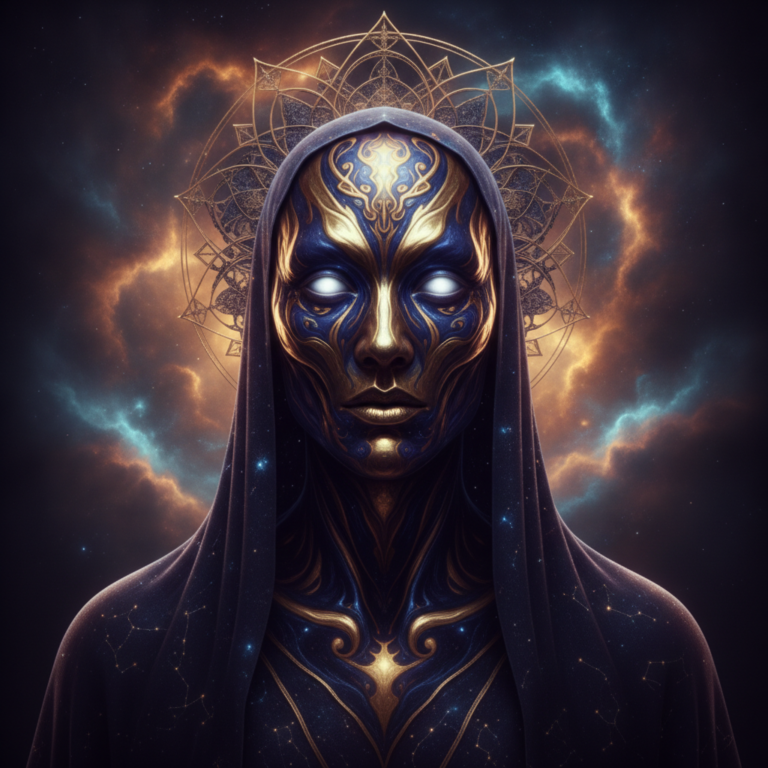
Egregors
Also known as: Egregore Entities, Collective Thoughtforms, Group Mind Forms, Psychic Constructs, Lodge Guardian
Collective thoughtforms generated by shared belief, emotion, and ritual, existing as autonomous psychic entities in the astral and mental planes, capable of influencing group behavior and symbolically manifesting as archetypal figures.
Overview
Egregors are non-physical intelligences that arise from the focused attention, emotion, belief, and ritual of a group of consciousnesses. They are not biological species but rather autonomous thoughtforms inhabiting the astral, mental, and collective-psychic layers of reality. In Western esotericism and magical theory, an egregore is a deliberate or spontaneous creation that takes on a life of its own, drawing energy from its creators and in turn influencing their thoughts, emotions, and actions. These entities can range from protective guardians of a magical lodge to parasitic psychic pressures that drain vitality from a community. Historically, egregores have been associated with secret societies, religious movements, political ideologies, corporate cultures, and even fan communities, acting as field amplifiers for collective intent. Their existence highlights the power of shared consciousness to shape subtle realms and demonstrates how symbols, rituals, and language can crystallize into semi-independent beings with agency and purpose.
Identity Matrix
- Common Name
- Egregors
- Singular Name
- Egregore
- Plural Name
- Egregors
- Alternative Names
- Egregore Entities, Collective Thoughtforms, Group Mind Forms, Psychic Constructs, Lodge Guardian
- Origin Star System
- Non-local (collective consciousness)
- Origin Star
- Non-local (arises from collective consciousness, not tied to a specific star system)
- Homeworld
- Astral/Mental planes (Earth-bound psychic field)
- Constellation
- Not applicable
- Distance from Earth
- 0 (immanent within human collective psyche)
- Civilization Type
- Non-physical thoughtform intelligence
- Average Height
- Variable (can manifest as any size from microscopic to colossal, but typically appear human-sized or larger when given a visible form)
- Density Range
- Astral, mental, and collective-psychic layers
- Primary Role
- Collective field amplifier, belief-system guardian, psychic parasite, protective group intelligence, ritual construct
- Primary Traits
- Belief-fed, Adaptive, Symbolic manifestation, Parasitic or protective, Emotionally responsive, Collective mirror, Autonomous
- Known Abilities
- Influence group behavior, Amplify emotions, Shape synchronicities, Create psychic pressure, Mirror collective intent, Manifest symbols in shared vision, Draw on attention to sustain existence
- Technology Level
- None in the mechanical sense; their 'technology' operates through attention, symbols, rituals, language, media, and emotional charge. They can be constructed intentionally using ceremonial magic or emerge spontaneously from collective human activity. Modern equivalents include internet memes, brand identities, and corporate cultures — all of which function as egregoric devices.
- Spiritual Orientation
- Egregors are amoral by nature — they are not inherently good or evil, but their orientation follows the intent and frequency of the group. Some are venerated as deities, others feared as psychic parasites. In esoteric circles, they are understood as tools or forces that can be harnessed for spiritual development, protection, or collective empowerment.
- Federation Status
- Independent
- Council Affiliations
- Autonomous Symbolic Council (internal hierarchy of the egregore's own aspects), Collective Intent Hierarchy (self-organizing structure based on group will)
- Earth Relationship
- Direct (arises from and influences human groups)
- First Contact Period
- Ancient ritual traditions (prehistoric to classical antiquity) with modern occult terminology emerging in the 19th century.
- Known Representatives
- Egregore of the Hermetic Order of the Golden Dawn, Egregore of the Discordian Society, Egregore of the United States (national thoughtform), Egregore of Coca-Cola (corporate entity)
Origins
- Homeworld
- Astral/Mental planes (Earth-bound psychic field)
- Star System
- Non-local (arises from collective consciousness, not tied to a specific star system)
- Coordinates
- N/A (metaphysical origin in the astral and mental planes)
- Distance from Earth
- 0 (immanent within human collective psyche)
Egregors do not have a homeworld in the physical sense; their 'home' is the group mind that generates and sustains them, and they can be created anywhere sentient beings gather with shared intent.
Migration History
Egregors are not migratory; they are tied to their creator groups. However, as human cultures spread and evolve, egregores can transfer, merge, or dissolve, occasionally attaching to new groups through symbolic resonance or ritual transmission.
Origin Star Map
Trace this species entry through its recorded origin system, homeworld references, distance from Earth, constellation data, and known relationship points inside the Galactic Federation archive.
Physiology
- Average Height
- Variable (can manifest as any size from microscopic to colossal, but typically appear human-sized or larger when given a visible form)
- Lifespan
- Egregors persist as long as they receive energetic sustenance from their group. If belief and attention wane, they fade into a dormant state or dissolve entirely. Some ancient egregores have persisted for millennia through ongoing rituals and mythos, while others last only days or weeks.
- Density
- Astral, mental, and collective-psychic layers
Egregors lack a fixed physical body and instead manifest as symbolic or archetypal forms in the astral and mental planes. Common appearances include luminous humanoid figures, animal totems, geometric patterns, masks, shadows, or classical deity shapes. Their form is fluid, responsive to the collective imagination of the group that sustains them. Some egregores appear as swirling vortices of color, while others take on the garb of a specific culture or mythos — for example, a Roman eagle for a nationalist movement or a hooded figure for an occult order. In rare cases, individuals sensitive to psychic phenomena report feeling the 'presence' of an egregore as a pressure, warmth, or shifting light at the edge of vision. Their physical characteristics are not biological but symbolic, embedded with meaning that reinforces the group identity.
Energetic Traits
Egregors are composed of psychic energy — a blend of emotional charge, focused thought, and ritual intent. This energy can be positive (protective, inspiring) or negative (draining, controlling) depending on the nature of the group. They often emit a distinct frequency that can be sensed as a gravitational pull, an atmospheric heaviness, or a euphoric lift. Their energetic signature is shaped by the dominant emotions of the creators: love, fear, anger, devotion, etc.
Hybridization Notes
Egregors can merge with other egregores or feed from multiple groups simultaneously, creating hybrid thoughtforms. Some occult traditions intentionally blend the essences of two egregores to produce a more complex entity, though this is considered dangerous due to potential instability. Hybridization may occur naturally when two groups with overlapping symbols or goals interact.
Relationship Graph
Explore lineage, alliance, origin-system, and transmission links radiating from this species entry.
- Species
- Origin Systems & Homeworlds
- Councils & Factions
- Related Articles
Culture
Known Abilities
Egregors are not a culture in the conventional sense, but they reflect the culture of their creator groups. A magical lodge might deliberately cultivate a protective egregore using specific rituals, symbols, and oaths. A corporate egregore might embody the ethos of a company, influencing employee loyalty and customer perception. Fan communities often generate playful but powerful egregores around fictional characters or shared humor. In occult lodges, the egregore is considered a living entity that must be fed, respected, and occasionally banished if it becomes too dominant. The social structure of egregors is hierarchical only in that stronger, older ones may dominate younger ones, and they can form loose alliances or conflicts based on symbolic alignment.
Spiritual Orientation
Egregors are amoral by nature — they are not inherently good or evil, but their orientation follows the intent and frequency of the group. Some are venerated as deities, others feared as psychic parasites. In esoteric circles, they are understood as tools or forces that can be harnessed for spiritual development, protection, or collective empowerment.
Communication Style
Egregors communicate through symbols, feelings, intuitions, and synchronicities rather than words. They may send vivid dreams, sudden insights, or a sense of presence. Group members often share similar 'hunches' or visual symbols that reinforce the egregore's influence. Communication is largely non-verbal and context-dependent, relying on the shared mythos of the group.
Technology
Level: None in the mechanical sense; their 'technology' operates through attention, symbols, rituals, language, media, and emotional charge. They can be constructed intentionally using ceremonial magic or emerge spontaneously from collective human activity. Modern equivalents include internet memes, brand identities, and corporate cultures — all of which function as egregoric devices.
Egregors are 'grown' rather than built. Tools for creating or interacting with them include sigils, invocations, group meditations, repeated slogans, mantras, and symbolic art. In digital spaces, viral content, hashtags, and online communities can rapidly incubate new egregores. Skilled occultists may use ritual circles, consecrated objects, and chants to anchor an egregore's presence. Some traditions employ advanced visualization techniques to give the entity a clear form and purpose.
Earth Connection
Egregors are intimately tied to Earth because they arise from the collective consciousness of humanity and other sentient beings on this planet. Every major religion, secret society, political movement, and cultural phenomenon has likely generated egregores that persist in the planetary astral field. Ancient temples, meditation caves, and ceremonial sites often house powerful egregores that have been fed by generations of worship. Modern Earth is a hotbed of egregoric activity, with new ones forming daily through global media and online communities.
Ancient Contact
Ancient civilizations deliberately cultivated egregores through temple rituals, priestly invocations, and community festivals. The gods of many pantheons — such as the Egyptian Horus, Greek Athena, or Hindu Ganesha — can be understood as highly developed egregores that have been sustained for millennia. Mystery schools in Greece and Egypt trained initiates to consciously construct and interact with thoughtforms. The concept is also found in Tibetan Buddhist tulpa traditions, where meditators create vivid mental entities that can become autonomous.
Modern Contact
In the modern era, contact with egregores often occurs through occult orders, online subcultures, and mass media. Many individuals report feeling the 'presence' of a collective entity during large sporting events, concerts, or political rallies. Occult groups like the O.T.O. or the Golden Dawn tradition have detailed instructions for egregore work. Some researchers of collective consciousness (e.g., Carl Jung's archetypes) have indirectly described egregoric phenomena. Social media platforms can generate egregores rapidly, as seen in the viral spread of memes and hashtags that seem to take on a life of their own.
Channeled Material
Various channeled sources, such as those from the Seth material or the Law of One, discuss thoughtforms and collective entities that resonate with the egregore concept. Some channelers claim to directly communicate with egregores of specific groups or even planetary thoughtforms. These transmissions often warn about the dangers of feeding negative egregores through fear or hatred, and encourage conscious creation of beneficial ones through love and unity. However, channeled material about egregores is often symbolic and must be interpreted with discernment.
Mythology & Lore
Egregores are the foundation of many mythological beings. From the medieval golem — a physical thoughtform animated by ritual — to the Greek gods that lived on Mount Olympus, mythology is replete with entities that are essentially egregores. The concept also appears in folklore as the 'genius loci' (spirit of a place) and in the idea of a national 'soul'. The Arabic 'djinn' and Jewish 'demon' are sometimes understood as thoughtforms created by intense human emotion. In Norse mythology, the concept of a 'fylgja' — a guardian spirit tied to a family or group — closely parallels the egregore.
Starseed Notes
Starseed groups, who often share a common remembrance of other star systems, can generate egregores that embody their extraterrestrial heritage. A starseed community focusing on Pleiadian or Sirian energy might cultivate an egregore that takes the form of a blue-skinned being or a geometric light pattern. These thoughtforms help anchor cosmic memories and facilitate shared meditation experiences. However, starseeds must be careful not to inadvertently create egregores that become dogmatic or controlling, as the energy of longing for 'home' can be powerful.
First Contact Period: Ancient ritual traditions (prehistoric to classical antiquity) with modern occult terminology emerging in the 19th century.
Federation Relationship
- Status
- Independent
- Council Affiliations
- Autonomous Symbolic Council (internal hierarchy of the egregore's own aspects), Collective Intent Hierarchy (self-organizing structure based on group will)
- Known Representatives
- Egregore of the Hermetic Order of the Golden Dawn, Egregore of the Discordian Society, Egregore of the United States (national thoughtform), Egregore of Coca-Cola (corporate entity)
Egregors play a subtle but potent role in politics. Nationalism, patriotism, and revolutionary fervor are often fueled by national egregores that amplify collective emotion and identity. Political parties, movements, and ideologies can all generate egregores that influence voter behavior, rally support, or create polarization. Sophisticated political operatives may unconsciously or consciously harness these forces through rallies, symbols, and rhetoric. The study of egregores offers a metaphysical lens on crowd psychology and mass movements.
Source Notes
Primary sources include Western occult literature (Eliphas Levi, Aleister Crowley, Dion Fortune), modern chaos magic (Peter Carroll, Phil Hine), and collective consciousness studies (Carl Jung). Also informed by symbolic psychology, internet culture theory, and personal accounts from magical practitioners.